
2026 Best Stained Glass Hanging Panel for Home Decor
A Stained Glass Hanging Panel can change a plain window into a focal point, especially when morning light passes through its colored pieces. The right design adds character without making a room feel crowded. But beauty is only part of the choice. Glass thickness, solder lines, hanging hardware, and panel weight affect how it looks and sits in daily use.
Louis Comfort Tiffany, the American artist and glass designer, wrote, “I have always striven to fix beauty in wood, stone, glass, or pottery, in oil or watercolor, by using whatever seemed fittest for the expression of beauty.” His words suit this choice: material and design should work together. In 2026, this guide explores panels for different rooms, styles, and budgets, while considering practical details such as window size, light direction, and care. A small panel may brighten a kitchen nook; a larger one can anchor a living-room window. Measure before you buy.
Not every listing explains how a panel is assembled or what hardware it includes. That matters. We’ll look at those details alongside color, craftsmanship, and value, so you can compare options with clearer expectations. Some choices still come down to taste, and photos can make glass appear brighter than it is. A little caution helps.
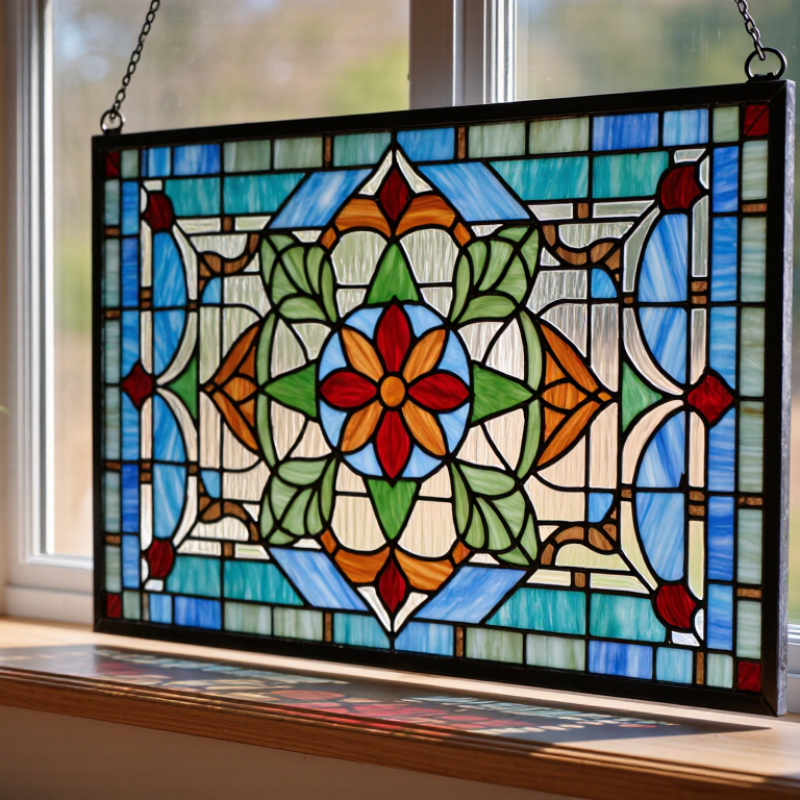
What Is a Stained Glass Hanging Panel?
A stained glass hanging panel is a decorative piece made from colored glass joined into a design. It hangs in front of a window or on a wall, rather than being built into the window itself. Light changes everything. Sunlight passing through the glass can cast soft patches of color across a sill or nearby floor. The effect shifts as the sun moves, so the panel may look different by afternoon.
Panels are commonly assembled with lead came or copper foil, then fitted with a loop, chain, or other hanging hardware. Their glass can be clear, textured, or richly colored. A sturdy hanging point matters; even a small panel can be heavier than it looks. Keep it clear of doors, busy walkways, and places where it could knock against a hard surface. Small variations in handmade glass are normal, though a rough edge or loose fitting deserves attention. I find that a panel can feel less bright on a cloudy day. That is part of its nature, not a fault.
For home decor, consider the window’s size, the available light, and the colors already in the room. A pale design may brighten a dim corner without blocking much daylight. A dense pattern can provide more privacy, but it may also darken the space. At night, the colors often appear subdued unless a light source sits behind the panel. Good placement matters.
How Materials and Craftsmanship Shape Panel Quality
A stained glass hanging panel earns its place through more than color. The glass should feel substantial, with textures that scatter daylight across a wall. Look closely at the joints: solder lines should be reasonably even, and edges should feel smooth rather than sharp. A sturdy frame and secure hanging points matter too. They help the panel sit level and reduce strain on its seams.
Tips: View the panel near a window, then from across the room. Check its hanging hardware and ask how the glass is supported. Colors can look quite different in evening light.
Handmade work often shows small variations in glass shape or solder width. That isn’t automatically a flaw; it can give a panel warmth. Still, uneven gaps, loose pieces, or rough finishing deserve a closer look. Ask about the glass type, construction method, and care instructions before buying. A good answer should be specific, not simply promise that the panel is durable. Keep in mind that no panel will look identical in every home. I once expected a richly colored piece to brighten a dim corner, but it needed more daylight than I had assumed.
Which Designs Suit Different Home Decor Styles?
A stained glass hanging panel can soften a room without changing its furniture. The right design depends on the shapes, colors, and light already present.
In a modern home, choose clean geometry, clear glass, and a restrained palette. A narrow panel in amber or pale blue can add color without crowding a simple window. Less can work.
For farmhouse or cottage rooms, botanical patterns and gently uneven borders feel at home beside linen curtains and painted wood. Traditional interiors often suit symmetrical designs, jewel tones, and small details that echo carved furniture.
In a bohemian space, try layered colors or an abstract sunburst, but check how it looks against nearby textiles. Too many strong colors can compete.
Light changes everything. A panel may look muted on a cloudy morning, then cast bright patches across the floor at noon. Before choosing, hold a color sample near the intended window, if possible. Also consider the panel’s size and hanging hardware; a heavy piece needs secure support. I would not match every color in the room exactly. A little contrast often feels more natural, though it can take a few tries to find the balance.
How to Choose the Right Size, Colors, and Hanging Location
Choosing the right size starts with the wall, not the panel. Measure the clear space near the window, then leave visible breathing room around the glass. A small panel can disappear on a broad wall, while an oversized one may crowd a narrow window. Measure twice. If possible, hold a paper template in place and view it from across the room. A size chart helps, but it cannot show how your furniture and window trim affect the balance.
Color depends heavily on daylight. Hold sample colors near the intended window at different times of day; pale blue may look cool in morning light and muted by evening. Consider nearby paint, curtains, and wood tones, too. A warm amber panel can soften a gray room, while strong reds may become the focal point. Light changes everything. I would not choose from an online image alone, since screens can shift color.
Pick a hanging location with steady light and enough clearance from doors, blinds, and moving curtains. For a sunny window, check whether direct heat or glare makes the panel uncomfortable to look at. Use suitable hardware for the panel’s weight, and confirm that the hook is secured to a stable surface. Keep the glass away from spots where it could be bumped. One detail is easy to overlook: the view from outside may differ from the view indoors, so check both before settling on a height.
2026 Best Stained Glass Hanging Panel for Home Decor - How to Choose the Right Size, Colors, and Hanging Location
| Room or Use | Suggested Panel Size | Color Direction | Suitable Hanging Location | Practical Checks |
|---|---|---|---|---|
| Small window or apartment accent | About 8–12 in wide × 12–18 in high | Two or three colors, with clear or lightly textured glass to keep the design visually open | Centered in a narrow window, leaving visible glass around the panel | Measure the visible glass area and confirm the panel will not block a window latch or opening mechanism. |
| Kitchen or breakfast nook | About 10–16 in wide × 14–22 in high | Warm amber, green, or clear accents for a welcoming look; choose colors that complement nearby finishes | In a window away from cooking heat, splashes, and frequently opened cabinets | Check that the hanging hardware and nearby surface can support the panel securely. |
| Living room focal point | About 14–20 in wide × 18–30 in high | A balanced palette of three to five colors; repeat one or two colors found in the room | In a bright window or in front of a window as a visual focal point | View the panel from the main seating area and allow enough clearance from curtains and window coverings. |
| Entryway or stair landing | About 10–16 in wide × 16–24 in high | Clear glass with a small number of bold accent colors for an easy-to-read design | In a secure window or on a wall where the panel will not be bumped by people or carried items | Avoid placing a hanging panel over a walking route or where a door can strike it. |
| Bedroom or quiet reading corner | About 8–14 in wide × 12–20 in high | Soft blues, greens, or neutrals; select a pattern that feels restful in the room | Near a window, positioned so it does not interfere with privacy coverings | Consider how the panel looks both in daylight and when the room is lit at night. |
| Large window or broad wall display | About 18–24 in wide × 24–36 in high, if the window and support allow | A larger pattern can use several colors; keep the palette coordinated with the room | A spacious window with suitable support, or a wall display with a secure hanging system | Check the panel’s actual weight, the rated capacity of the hardware, and the strength of the mounting surface. |
Sizing note: These are starting-point ranges, not standard product dimensions. Measure the intended space before buying, compare the panel’s overall dimensions with the available opening, and follow the maker’s installation and care instructions.
How to Install and Care for a Stained Glass Panel
2026 Best Stained Glass Hanging Panel for Home Decor
How to Install and Care for a Stained Glass Panel
Before installation, weigh the panel and choose hardware rated above its full weight. Fix hooks or brackets into a wall stud or solid window-frame material, not drywall alone. Use two attachment points when the panel is wide; this reduces swinging and uneven strain. Keep it clear of moving sashes, handles, and walkways. Never drill the glass or soldered joints. Check that the panel hangs level, then gently test the hardware. A tiny tilt can be surprisingly visible in morning light.
For window displays, leave room for airflow and avoid trapping the panel against hot glass. The U.S. Department of Energy’s Energy Saver guidance estimates that windows account for about 25–30% of home heating and cooling energy use. A decorative panel is not insulation, so maintain weatherstripping and keep locks accessible. That distinction is easy to overlook.
Dust with a soft, dry microfiber cloth, supporting the panel with your other hand. For fingerprints, use a lightly damp cloth and mild soap, then dry promptly. Skip abrasive pads and ammonia-based cleaners; they may dull or damage finishes. Inspect chains, hooks, and joints every few months, especially after strong wind or repeated window use. If solder looks cracked or the frame feels loose, stop handling the panel and ask a qualified stained-glass restorer to assess it. Not every flaw needs fixing, but guessing can make a small repair harder.
2026 Best Stained Glass Hanging Panel for Home Decor
Suggested care intervals for a stained glass panel displayed indoors. Adjust them for your room conditions and the panel maker’s instructions.
Care tip: Dust gently with a soft, dry cloth. When needed, use a lightly dampened cloth on the glass and dry it promptly. Avoid abrasive tools and harsh cleaners, and check the hanging hardware regularly. For installation, use hardware suited to the panel’s weight and secure it to a suitable structural support.
Article Source:


Fall into Function: How LaFata Cabinets Prepares Your Kitchen for the Cozy Season


Back-to-School Kitchen Refresh: How LaFata Cabinets Can Help You Stay Organized This Fall


