
top of page

10 Best Pipe Cutting Machines for Buyers in 2026?

Choosing among the 10 best pipe cutting machines for buyers in 2026 starts with the work on your shop floor. A machine that handles thin-wall stainless tubing may struggle with heavy steel pipe. Consider material, diameter, wall thickness, cut angle, and daily production volume. These details matter more than a polished product photo.

Pipe fabrication specialist Maya Chen offers a practical reminder: “A clean cut matters only when it suits the next operation.” That means checking more than cutting speed. Look at kerf quality, burrs, repeatability, setup time, and how easily operators can secure each pipe. A rough edge can add grinding time. A small alignment error can spoil a costly length. Those minutes add up.

This guide compares machine types and buyer priorities, from portable saws to automated cold-cutting systems. It also considers blade life, maintenance access, safety features, support, and total ownership cost. A low purchase price can be tempting. It is not the whole story. Some listings provide thin technical details, so buyers should verify specifications directly before committing. No single machine fits every shop. The right choice depends on what you cut, how often you cut it, and what happens after the cut.
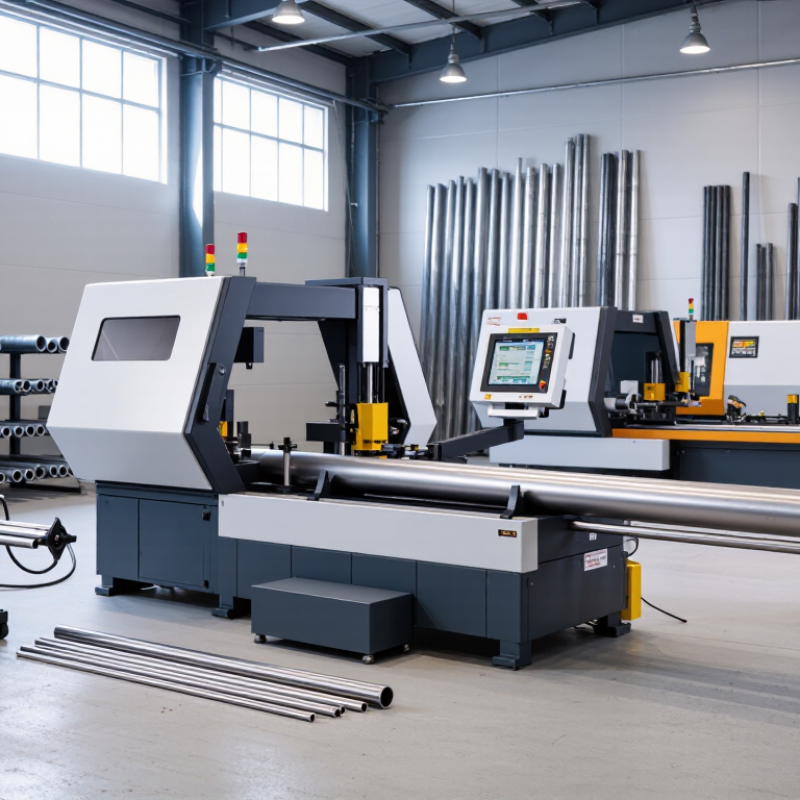
10 Best Pipe Cutting Machines for Buyers in 2026?

Pipe Cutting Machine Basics: Match Capacity to ASME B36.10M NPS 1/8–80

For a 2026 pipe-cutting machine shortlist, start with the pipe range, not the machine’s headline capacity. ASME B36.10M defines dimensions for welded and seamless wrought steel pipe. Its NPS range runs from 1/8 to 80, but NPS is a nominal size, not a direct measurement of outside diameter. For example, NPS 1/8 pipe has a 0.405-inch outside diameter, while NPS 80 pipe is 80 inches across.

Then check the actual outside-diameter and wall-thickness limits in the machine specifications. Schedule changes wall thickness, even when the NPS stays the same. A cutter rated for a given diameter may still struggle with thick-wall pipe, tough materials, or a required bevel. Ask for capacity tables that name both diameter and wall thickness. A neat range on a brochure can hide limits.

Match the cutting method to the work. A shop handling small, thin-wall pipe may value clean, repeatable cuts and quick setup. Large-diameter field work may need stable clamping, controlled rotation, and room for the operator. Check cut squareness, bevel options, power supply, and how the machine handles imperfect pipe ends. I would not size capacity to a single typical job; leave room for the odd heavy-wall section. That judgment can be messy. Confirm the pipe specification and test a representative sample before purchase.

10 Best Pipe Cutting Machines for Buyers in 2026? - Pipe Cutting Machine Basics: Match Capacity to ASME B36.10M NPS 1/8–80

# Machine type Typical practical NPS range* OD at upper NPS Best suited for Key selection considerations
1 Manual rotary pipe cutter NPS 1/8–2 2.375 in (60.3 mm) Small-diameter, thin-wall tubing and compatible pipe materials. Check material and wall-thickness limits; many manual cutters are not intended for heavy-wall carbon steel pipe.
2 Portable reciprocating saw NPS 1/8–6 6.625 in (168.3 mm) Repairs, confined spaces, and occasional field cuts. Flexible and portable, but cut squareness and finish depend on setup, blade, and operator skill.
3 Portable band saw NPS 1/8–6 6.625 in (168.3 mm) Repeatable shop or site cuts on small and medium pipe. Confirm the saw’s throat capacity and clamping arrangement; blade selection affects performance and finish.
4 Cold-cut circular pipe saw NPS 1/2–12 12.750 in (323.9 mm) Cleaner, relatively fast cuts where heat and sparks should be limited. Verify the machine’s maximum OD, wall-thickness rating, and approved blade for the pipe material.
5 Abrasive cut-off saw NPS 1/8–6 6.625 in (168.3 mm) Economical cutting of smaller metal pipe in a workshop. Produces heat, sparks, and an abrasive kerf; use suitable guarding and check wheel capacity and pipe support.
6 Stationary pipe cutoff saw NPS 1/2–24 24.000 in (609.6 mm) Production cutting of supported pipe in a dedicated fabrication area. Compare maximum OD, blade travel, clamping range, and the machine’s stated wall capacity.
7 Portable split-frame cold-cutting and beveling machine Common configurations span NPS 1/2–48 48.000 in (1,219.2 mm) In-place cutting and bevel preparation for maintenance or pipeline work. Frame size, wall capacity, drive type, and available bevel angles vary by configuration; allow access around the pipe.
8 Orbital or planetary pipe-cutting machine Common configurations span NPS 1/4–24 24.000 in (609.6 mm) Controlled, repeatable cuts, particularly on tubing and thinner-wall pipe. Check whether the cutting head is rated for the pipe’s OD, material, and wall thickness; some systems focus on tubing rather than heavy-wall pipe.
9 CNC plasma pipe-cutting or profiling system Common configurations span NPS 2–48 48.000 in (1,219.2 mm) Programmed cuts, profiles, and bevels for fabrication work. Match torch process, material, wall thickness, and software capability; plasma is a thermal process and needs fume and fire controls.
10 Oxy-fuel track or gantry pipe cutter Large-pipe configurations can extend to NPS 80 80.000 in (2,032 mm) Large-diameter carbon-steel pipe and heavy fabrication cuts. Confirm the rated OD and wall thickness, gas setup, and cut quality requirements; oxy-fuel is generally suited to carbon steel, not stainless steel or nonferrous metals.
Buyer’s note: NPS is a nominal pipe size, not the measured outside diameter. The OD figures above are the ASME B36.10M outside diameters at each listed upper NPS. Pipe schedule changes wall thickness and inside diameter, not the NPS-based OD. Machine ranges are representative selection examples, not standardized ratings; confirm each machine’s specified OD, wall-thickness, material, and bevel capacity before purchase.

Compare Manual, Band-Saw, Cold-Cut, Plasma, and Laser Technologies

Manual cutters suit low-volume work, thin-wall tube, and cramped repair bays. They are inexpensive, but cut quality depends heavily on operator pressure and alignment. Band saws handle mixed diameters and repeat batches well; a worn blade can leave burrs that need extra finishing. Cold-cut machines limit heat and help preserve clean, square ends, useful before welding or threading. Clean edges matter.

Plasma cutting works quickly on conductive metals, especially larger pipe, but creates heat, sparks, and a wider kerf. Laser cutting offers narrow cuts and strong repeatability for automated production, though setup cost and tube alignment matter. Deloitte’s 2024 Smart Manufacturing Survey found 86% of manufacturing executives saw smart manufacturing as a competitiveness driver over five years. Grand View Research’s 2024 laser-cutting-machine outlook forecasts 7.7% annual market growth through 2030. These figures support automation’s momentum, not a claim that every shop needs a laser.

Match the process to wall thickness, diameter range, daily cut volume, and required edge finish. A small shop may lose money automating occasional cuts; a high-volume line may lose time deburring saw cuts. One awkward detail: compare complete cycle time, including loading, clamping, and cleanup, not just the blade’s cutting speed. Pipe variation can also disrupt automated alignment. Test representative material before buying.

Evaluate Cut Quality Using ISO 9013:2017’s 0.5–150 mm Scope

ISO 9013:2017 covers thermal cuts in material thicknesses from 0.5 to 150 mm. For buyers comparing pipe-cutting machines, that range offers a useful reference when the machine uses a covered thermal-cutting process. It does not apply to every cutting method, certify a machine, or describe every pipe-specific feature. That distinction matters.

The standard provides a framework for evaluating cut characteristics, including perpendicularity or angularity tolerance and mean profile height. Ask for samples made from your material, near your typical wall thickness and production settings. Check measurements at several points along the cut face, not just the cleanest edge. Inspect dross, bevel consistency, and heat effects separately when they could affect fit-up. Details matter.

A flat test coupon can look excellent, while a curved pipe or restricted cutting angle changes the result. Ask suppliers to record test conditions, measurement methods, and relevant ISO 9013 results. Also inspect starts, stops, intersections, and bevels on representative pipe sections. The standard’s thickness scope is broad, but one test cannot represent every diameter or setup. Real production varies. Treat a standards-based result as useful evidence, not the whole decision.

Compare 10 Leading Pipe Cutters by Capacity, Accuracy, Speed, and Cost

Choosing among ten leading pipe cutting machines starts with capacity. A compact rotary cutter may handle small copper or stainless lines, while a hinged cutter or band saw suits larger steel pipe. Check the stated diameter range and wall thickness together; diameter alone can mislead. A pipe that fits the jaws may still exceed the machine’s cutting limits.

Accuracy depends on blade condition, clamping stability, and operator setup. Cold saws and orbital cutters can produce clean, repeatable ends, while abrasive machines often cut faster but may leave more heat and burrs. For tight fit-up, inspect squareness and edge quality, not just the machine’s advertised tolerance. Measure a test cut. Small details matter.

Speed also depends on setup time, material, and cut volume. A fast machine may not save time if each pipe needs careful repositioning. Compare ten options by total cost: purchase price, replacement blades, power use, maintenance, and training. Manual or portable models can suit occasional work; automated systems may justify higher costs on steady production lines. The awkward part? Supplier capacity figures may use different materials and conditions. Ask for a sample cut on your own pipe before committing.

Check Safety, Power, Maintenance, and Standards Before Buying in 2026

A pipe cutter should be chosen for the work it must repeat, not just its advertised motor rating. Match cutting capacity to pipe diameter, wall thickness, and material, then check power under load and the stated duty cycle. Ask for a sample cut at your normal feed rate. Watch for vibration, burrs, and heat. Small details matter.

Safety deserves a hands-on check. Confirm that guards cover the blade, emergency stops are reachable, and controls prevent accidental starts. The U.S. Bureau of Labor Statistics reported 2.6 million nonfatal workplace injury and illness cases in private industry for 2023, or 2.4 cases per 100 full-time workers. This broad figure is not specific to pipe-cutting machines, but it shows why risk controls matter. Review ISO 12100 and ISO 13849-1 as safety-design references; U.S. buyers should also check applicable OSHA machine-guarding requirements, including 29 CFR 1910.212.

Maintenance can make a capable machine frustrating. Look for accessible blade changes, clear lubrication instructions, and easy removal of metal chips. Ask how often consumables need replacement under your expected workload, and whether service parts are readily available. Check the manual, electrical supply, guarding, and noise data before purchase. A polished demonstration is useful, but it cannot replace a realistic trial. I would still verify the figures in writing; brochures can leave out inconvenient limits.

10 Pipe Cutting Machine Types to Compare in 2026

Illustrative buyer-screening ratings (1 = lower, 5 = higher) across safety potential, cutting power or throughput, maintenance ease, and standards-readiness potential.

Ratings are qualitative category-level comparisons, not product test results or verified compliance claims. Actual performance depends on pipe material, diameter, wall thickness, setup, and operator skill. Confirm machine guarding, documentation, and applicable local standards before purchase.

S O C I A L 

  • Facebook
  • Instagram
  • Pinterest

©2022 by LaFata Cabinets. Proudly created with Wix.com

bottom of page