How to Choose a Multipurpose Electric Kettle in 2026
A kettle now does more than boil water. Some models brew tea, prepare baby formula, warm soup, or hold water at a chosen temperature. That flexibility makes the Multipurpose Electric Kettle appealing, but extra settings do not automatically mean better performance.
Grand View Research estimated the global electric kettle market at about USD 1.7 billion in 2023 and projected continued growth through 2030. This market estimate signals sustained demand, not proof that every feature is useful. Buyers still need to check measurable details: capacity, temperature accuracy, heating speed, keep-warm duration, and whether the inner surface is easy to clean. A glass body may reveal limescale; a crowded control panel may not.
Small details matter. A 1.5-liter kettle can suit a couple, while a larger household may need more capacity. Tea drinkers may value adjustable temperatures, but the settings should match the drinks they actually make. Safety features deserve equal attention, including automatic shutoff and boil-dry protection. Look for clear warranty terms and product specifications, rather than relying on broad claims such as “premium” or “all-in-one.” And yes, some convenient features may rarely leave the box. This guide explains how to compare practical functions, materials, safety, and long-term value before choosing a kettle for 2026.
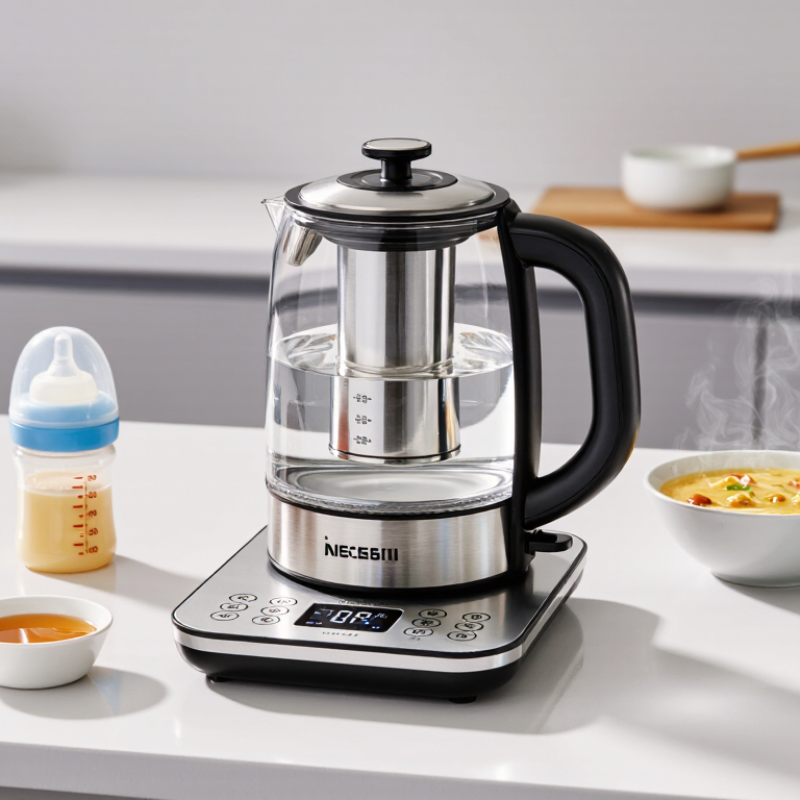
Define a Multipurpose Kettle by Its Heating, Steeping, and Cooking Functions
A multipurpose electric kettle should do more than boil water quickly. It should heat accurately, steep ingredients, and handle simple cooking tasks without turning every use into a workaround. The U.S. Department of Energy’s Energy Saver guidance estimates that water heating accounts for about 18% of household energy use. That figure covers household water heating overall, not kettle consumption, so it should not be mistaken for an appliance-efficiency rating. Still, it makes accurate fill markings and sensible batch sizes worth considering. Small details matter.
For steeping, adjustable temperature settings and a removable infuser help match heat to tea leaves or herbs. A clear display is useful, but only if its readings are dependable; check whether the kettle holds a selected temperature or merely reaches it. For cooking, a wide opening and washable interior make warming oats, broth, or other simple foods easier. Yet “cooking” can mean very different things. A kettle may heat ingredients, but it may not provide steady simmering or prevent scorching. Not always. Look for clear function limits, easy cleaning, and controls you can operate safely around hot steam.
Match Capacity to Household Use: 1 L of Water Weighs About 1 kg
Capacity sounds abstract until you fill the kettle at breakfast. One liter of water weighs about one kilogram, before adding the kettle’s own weight. A full 1.7-liter kettle therefore holds about 1.7 kilograms of water. That matters when you lift it with one hand or pour beside a crowded sink. Consider how many cups your household actually makes at once. A couple may need less capacity than a family that fills travel mugs before school. Bigger is not always better; extra water takes longer to heat and can be awkward to handle.
Tips: Estimate your usual boil by measuring your cups once. Check the kettle’s minimum and maximum fill marks, and leave room below the maximum. Small detail, but easy to miss.
Capacity labels can also be misleading if you picture only water weight. The empty kettle, handle shape, and grip all affect how manageable it feels when full. If you regularly boil just one mug, a smaller model may suit your routine. If guests visit often, a larger one could save repeat boils. I might still choose a little extra capacity, though I’d question whether that convenience earns its counter space.
Compare Temperature Settings with Water’s 100°C Sea-Level Boiling Point
At sea level, pure water boils at about 100°C under ordinary atmospheric pressure. A kettle’s temperature settings help you heat water to a chosen point, but they cannot make open water stay hotter than its boiling point. For green tea, delicate leaves often benefit from cooler water; pour-over coffee commonly uses hotter water, though personal taste and brewing method matter. That matters.
Altitude changes the comparison. In a high-altitude home, water may boil below 100°C because air pressure is lower. A kettle’s display may also differ slightly from the water’s actual temperature, especially if its sensor needs calibration or the water keeps heating briefly after the kettle switches off. Check the manual, and treat the displayed number as a useful guide rather than laboratory precision. Small differences count.
Tips: Choose a model with clear temperature steps and a reliable keep-warm function. If you want water near boiling, compare the setting with your local conditions; don’t assume 100°C is achievable everywhere. I sometimes focus too much on the exact number, when taste is the better test.
How to Choose a Multipurpose Electric Kettle in 2026
Compare example temperature settings with water’s 100°C boiling point at sea level.
The bars show example selectable setpoints, not settings available on every kettle. A temperature-controlled kettle can be useful when you want water below boiling; at sea level, pure water boils at about 100°C. Actual boiling temperature decreases with altitude.
Estimate Energy Use: Heating 1 L from 20°C to 100°C Takes About 0.093 kWh Ideally
For a multipurpose electric kettle, energy use starts with a simple benchmark: heating 1 L of water from 20°C to 100°C requires about 0.093 kWh in ideal conditions. The estimate uses water’s heat capacity, about 4.18 kJ per kilogram per degree, and the U.S. Energy Information Administration’s conversion of 3.6 MJ per kWh. NIST reference data support the heat-capacity figure. One litre of water weighs roughly one kilogram.
A real boil draws more electricity. The kettle body warms, heat escapes into the room, and automatic shutoff may occur after boiling begins. So treat 0.093 kWh as a useful floor, not a product rating. For a fair comparison, check measured energy per litre, minimum fill level, and whether keep-warm mode runs continuously. That last detail is easy to overlook.
Tips: Fill only what you need. Use a plug-in energy meter to compare settings at home, and record the starting water temperature. Repeat the test; one reading can mislead. For soup or tea, temperature presets may save energy by avoiding a full boil, though the actual savings depend on your routine.
Check Electrical and Appliance Safety Against IEC 60335-2-15
When choosing a multipurpose electric kettle, look beyond the control panel and check the safety paperwork. IEC 60335-2-15 specifies particular safety requirements for appliances that heat liquids, alongside the general requirements in IEC 60335-1. Ask whether the exact model and its functions were assessed against the relevant standard edition. A kettle with keep-warm or cooking settings may face different operating conditions. Small print matters. Check for boil-dry protection, automatic shutoff, a stable base, and clear instructions on filling and cleaning. Paperwork helps, but it cannot reveal a loose lid hinge after months of use.
The NFPA’s 2022 Home Electrical Fires report estimated an annual average of 46,700 U.S. home fires involving electrical failure or malfunction during 2015–2019, with $1.5 billion in direct property damage. This broad category is not kettle-specific, but it shows why electrical safeguards deserve attention. Not just a feature count. Request a test report or declaration that identifies the model, voltage, and applicable standard; vague claims such as “international safety tested” are harder to verify. Also inspect the cord, plug, and water-level markings in person. A certification mark is useful, not a promise of perfect performance.