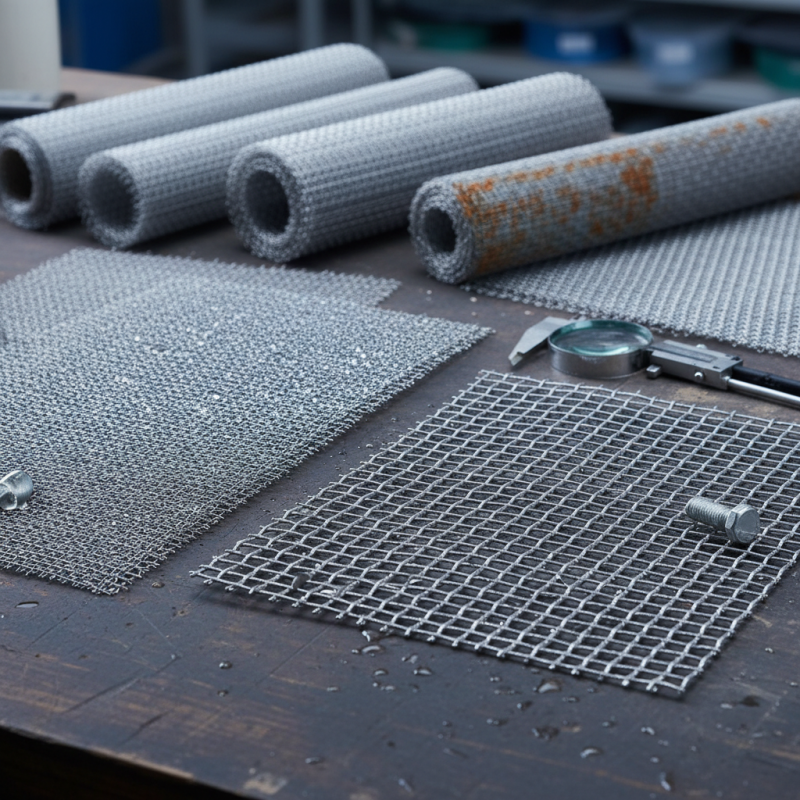
How to Choose the Right Stainless Steel Wire Mesh for Your Project?
Choosing the right stainless steel wire mesh for your project can be challenging. This material serves various purposes, from filtration to security. Selecting the wrong one might lead to project delays and extra costs.
stainless steel wire mesh comes in different grades, styles, and hole sizes. Understanding these options is crucial. For example, a finer mesh may be perfect for filtering liquids, yet it may not provide the durability required for heavy-duty applications. Reflections on your specific needs can help narrow the choices.
Consider the environment where the mesh will be used. Will it face extreme temperatures or moisture? These factors influence the type of stainless steel needed. Remember, sometimes the best option is not the most popular one. Being clear about your project's demands can lead to more satisfactory choices.
Types of Stainless Steel Wire Mesh Available in the Market
When selecting stainless steel wire mesh, it's essential to understand the various types available. Some of the most common types include plain weave, twill weave, and Dutch weave. Each type has its unique properties that suit different applications. For example, plain weave offers a balanced structure and is widely used in filtration. However, this type may not always provide the strength needed for heavy-duty tasks.
Twill weave is another option that features a unique design, offering improved strength and flexibility. It's ideal for applications requiring intricate filtering, like food processing. But it may not perform well in all settings.
Dutch weave, on the other hand, is engineered for high-pressure applications. This type ensures even distribution of stress, but it can be more expensive.
Choosing the right type depends on the specific needs of your project. Factors such as wire diameter, mesh opening size, and corrosion resistance must all be considered. Not all wire meshes are suitable for high-temperature environments or harsh chemicals. Reflect on your project requirements carefully before making a decision. It's easy to overlook these details, leading to potential issues down the line.
Factors to Consider When Choosing Stainless Steel Wire Mesh
Choosing the right stainless steel wire mesh for your project can be challenging. Several factors influence your decision. Start by considering the mesh size. Smaller openings provide better filtering but may reduce visibility. Larger openings allow good airflow but may not filter out small particles effectively.
Material quality is another key factor. Stainless steel comes in various grades. Higher grades offer better corrosion resistance but may cost more. Think about your environment. If it’s humid or exposed to chemicals, opt for a high-grade mesh.
Tips: Evaluate the application. Will it be indoors or outdoors? How much weight will it bear? Remember to assess your budget. Sometimes, the cheapest option may lead to more issues later. Check installation requirements, too. Complicated setups can cause headaches. Understand these factors before making a final choice.
Applications and Uses of Stainless Steel Wire Mesh
Stainless steel wire mesh is versatile. Its applications span various industries. From architectural mesh to filtration systems, its uses are abundant. In construction, it provides structural support and aesthetic appeal. It also strengthens concrete designs. In the food industry, it plays a crucial role in processing and packaging. Its resistance to corrosion makes it ideal for environments with moisture.
In the medical sector, stainless steel wire mesh is used in surgical instruments and implants. According to a market report, the demand for medical-grade stainless steel wire mesh has risen by 15% over the past five years. This growth reflects its importance in ensuring safety and efficacy in healthcare settings.
Tips: When selecting wire mesh, consider the mesh size. A finer mesh may be better for filtration, while larger openings work well for ventilation. Always assess the environment the mesh will be exposed to. Incorrect choices can lead to damage and costly replacements. Remember, the right application can make a notable difference in performance. Too often, people overlook the importance of compatibility in their projects.
Applications of Stainless Steel Wire Mesh
Maintenance and Care for Stainless Steel Wire Mesh
When it comes to stainless steel wire mesh, proper maintenance is essential. Regular cleaning prevents the buildup of dirt or grime. Use mild detergents and warm water for most tasks. Rinse thoroughly after washing. This simple routine can extend the life of your mesh significantly.
Tips: Ensure you dry the mesh completely. Moisture can lead to rust, even in stainless steel. Use a soft cloth to remove any water spots. If your mesh develops discoloration, consider a gentle abrasive cleaner. This can restore its original shine without damaging the surface.
Don't overlook protective measures. If your project is outdoors, consider applying a protective layer. This can shield the mesh from harsh weather conditions. Regular inspection is advisable as well. Look for signs of wear or damage. Addressing small issues early can prevent costly repairs later. Remember, care isn't just a task; it's an investment in durability.
Comparing Cost and Quality of Different Stainless Steel Wire Mesh Types
When choosing stainless steel wire mesh, cost and quality play critical roles. Several types exist, each suited for specific applications. For instance, 304 stainless steel mesh is prevalent for its affordability and decent corrosion resistance. Reports suggest that it accounts for roughly 40% of the market share in various applications. However, projects requiring higher strength and better durability often lean towards 316 stainless steel. Its price can be about 20% higher, yet it offers superior resistance to chlorides.
Quality also hinges on mesh specifications. A finer mesh provides better filtration, while a coarser variant allows for easier airflow. Industry data indicates that a mesh count of 100 is ideal for finer filtration tasks, while a 10 mesh is effective for heavier duties. Prices often correlate with these specifications, where a higher mesh count may not always equate to better durability. Some projects might compromise on quality to cut costs. This approach can lead to increased maintenance or replacement needs down the road. Choosing the right type requires careful consideration of both the initial cost and long-term value.
How to Choose the Right Stainless Steel Wire Mesh for Your Project? - Comparing Cost and Quality of Different Stainless Steel Wire Mesh Types
| Mesh Type | Wire Diameter (mm) | Aperture Size (mm) | Cost per Square Meter ($) | Corrosion Resistance | Application |
| 304 Stainless Steel | 0.5 | 1.0 | 25 | Moderate | General Purpose |
| 316 Stainless Steel | 0.8 | 1.5 | 35 | High | Marine Applications |
| 430 Stainless Steel | 0.6 | 1.2 | 20 | Low | Indoor Use |
| Duplex Stainless Steel | 0.7 | 1.0 | 40 | Very High | Chemical Processing |