
How to Choose the Best Restaurant Cooler in 2026?
Choosing a Restaurant Cooler in 2026 means balancing food protection, storage access, and long-term running costs. A unit may look spacious in a showroom but feel cramped beside a busy prep line. Frequent door openings, warm deliveries, and tightly packed shelves all affect daily performance. Small details matter.
Energy deserves careful attention. ENERGY STAR’s commercial refrigeration guidance reports that certified commercial refrigerators and freezers are about 20% more energy-efficient than standard models. The U.S. Energy Information Administration’s 2018 Commercial Buildings Energy Consumption Survey attributes roughly 6% of commercial-building electricity use to refrigeration. That figure covers many building types, not restaurants alone, but it shows why efficiency belongs in the buying conversation. Check each model’s energy-use data, usable capacity, and stated operating conditions rather than relying on a label alone.
The right choice depends on the kitchen’s actual routine. Measure the doorway, service path, and available floor space before comparing reach-in, undercounter, or glass-door designs. Then consider shelf adjustment, door swing, cleaning access, and temperature monitoring. A specification sheet cannot predict every service rush; that limitation deserves attention. Staff habits and room heat matter, too. Not every model fits. This guide explains how to compare Restaurant Cooler options using practical criteria, credible efficiency information, and questions worth asking suppliers before purchase.
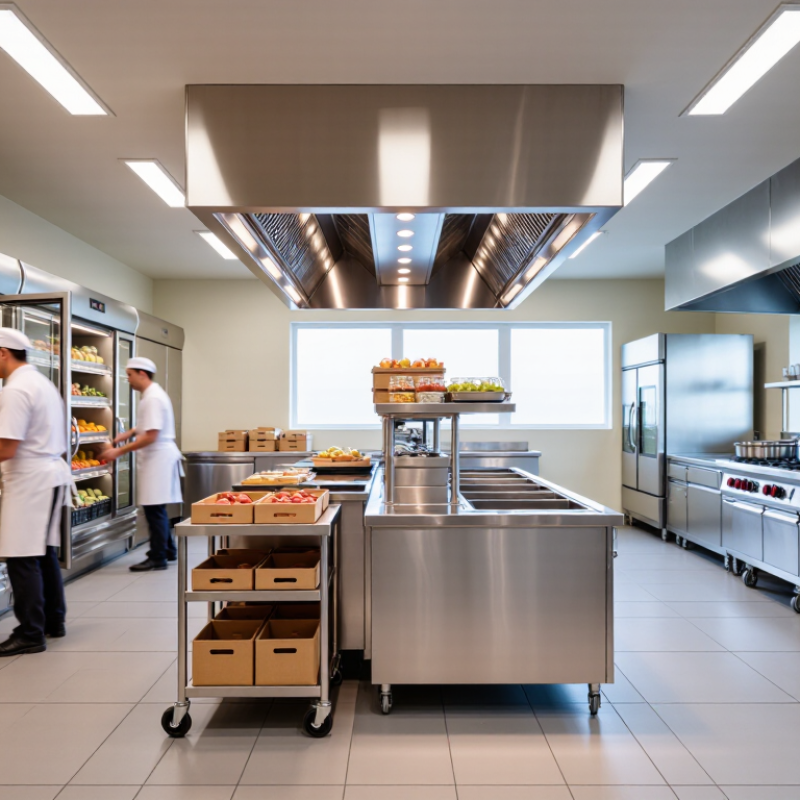
Define the Cooler Type and Capacity Around Menu Volume and Peak-Service Demand
Choose the cooler around the food your kitchen actually handles, not just the floor space available. A reach-in suits packaged ingredients and backup stock; a refrigerated prep table keeps frequently used toppings close to the line. A walk-in may make sense when deliveries are large or menus rely on bulky produce and proteins. The right type depends on access during service as much as total storage.
Estimate capacity from a typical delivery and the busiest shift. List the pans, cases, and containers that need refrigeration, then allow room for air to circulate. A tightly packed cooler can struggle to hold an even temperature. Leave breathing room. Also consider how often staff open the door: a compact unit beside a busy pass may be less useful than a larger unit placed nearby but out of the traffic flow.
Peak demand can expose a poor fit quickly. Track the busiest service period and note which items run low, where staff reach for them, and whether restocking blocks prep. That matters. Capacity estimates are imperfect, especially when menus change or seasonal orders arrive. Revisit the estimate after a few weeks of real service, and check that shelves, pans, and door openings match daily work. A little unused space is usually easier to manage than overloaded shelves and hurried restocking.
How to Choose the Best Restaurant Cooler in 2026?
Define cooler type and capacity around menu volume and peak-service demand
Planning examples only: a small café may suit a compact reach-in, a busy casual restaurant may need multiple reach-ins, and a high-volume operation may benefit from a walk-in. These illustrative usable-capacity estimates are not universal standards. Check menu mix, delivery frequency, inventory levels, available space, and peak-service workflow before sizing equipment.
Set the Food-Safety Target: FDA Food Code Requires Cold Holding at 41°F or Below
How to Choose the Best Restaurant Cooler in 2026?
Set the Food-Safety Target: FDA Food Code Requires Cold Holding at 41°F or Below
A restaurant cooler should keep time/temperature control for safety food at 41°F (5°C) or below. The FDA Food Code 2022 sets this cold-holding limit in section 3-501.16. It is a model code, so check local requirements too. Choose equipment that can hold the target during busy service, not just when the kitchen is quiet. A display reading alone may not show the temperature inside a pan of cut chicken or dairy. Small details matter.
The CDC estimates that foodborne illnesses cause about 48 million illnesses in the United States each year. That estimate covers many causes, but it shows why dependable temperature control matters. Look for clear temperature displays, sturdy door seals, and shelves that allow air to circulate. Leave room around containers; tightly packed pans can create warmer pockets. A cooler is only part of the system. Staff checks and prompt repairs matter, too.
Compare Energy Performance: ENERGY STAR Says Certified Commercial Units Use About 20% Less Energy
Choosing a restaurant cooler in 2026 means balancing food storage needs with daily energy costs. ENERGY STAR says certified commercial units use about 20% less energy than standard models. Treat that figure as a helpful benchmark, not a promise of identical savings in every kitchen. Door openings, room temperature, loading habits, and maintenance all affect actual consumption.
Compare annual energy use in kilowatt-hours, and check that the models have similar capacity and configuration. A compact reach-in and a larger glass-door cooler are not fair comparisons. Use your electricity rate to estimate yearly costs. Then inspect practical details: tight door gaskets, self-closing doors, clear temperature displays, and enough space around the condenser for airflow. Small details matter. A high-efficiency unit can still waste energy if its doors stay open or its coils collect dust.
Tips: Read the energy label before comparing prices. Check the stated capacity and annual consumption. Ask whether the cooler suits your busiest service period, not just a quiet afternoon. I would also leave room in the budget for routine cleaning; it is easy to overlook, and that can affect performance over time.
Verify Sanitation and Equipment Compliance Against NSF/ANSI 7
How to Choose the Best Restaurant Cooler in 2026?
Before comparing capacity or energy use, verify that the cooler is evaluated to NSF/ANSI 7, the standard for commercial refrigerators and freezers. Check the actual model’s certification and nameplate, not just a sales sheet. Confirm the unit is suitable for your kitchen’s ambient temperature and intended use. A display case beside a hot oven faces different conditions from a walk-in prep area. Small details matter.
NSF/ANSI 7 compliance supports sanitary design and performance; it does not guarantee safe food handling by itself. The FDA Food Code 2022 uses 41°F (5°C) or below as the cold-holding limit for time/temperature control foods. CDC estimates that foodborne illnesses affect about 48 million people in the United States each year. Those figures make dependable temperature control more than a purchasing checkbox. Ask for documentation, then test the installed cooler with a calibrated thermometer during a busy service period. Check door seals, drain areas, and temperature recovery after repeated openings. Paperwork can look reassuring; it is not the whole test. I would also record temperatures over several days, since one quiet morning may hide a problem that appears during dinner rush.
How to Choose the Best Restaurant Cooler in 2026? - Verify Sanitation and Equipment Compliance Against NSF/ANSI 7
| Selection dimension | What to verify | Practical check | Evidence to keep |
|---|---|---|---|
| NSF/ANSI 7 certification | NSF/ANSI 7 applies to commercial refrigerators and freezers. Check that the exact model is certified to the standard—not just that the product description says “NSF compliant.” | Search the certifier’s official directory and confirm the model and product category are included in the certification scope. | Directory listing, certification record, and product label or nameplate details. |
| Sanitary construction | Review interior surfaces, joints, corners, shelves, and other food-zone components for cleanability and suitability for the intended use. | Inspect the unit or its technical documentation for accessible surfaces and areas that can be cleaned without unusual tools or disassembly. | Product specifications, care instructions, and certification documentation for the exact model. |
| Cold-holding temperature | The FDA Food Code model provisions generally require time/temperature control for safety (TCS) food to be held at 41°F (5°C) or below, subject to specified exceptions and local adoption. | Check actual product temperatures under normal operating conditions; do not rely only on the control-panel set point or cabinet-air reading. | Commissioning temperature checks and routine temperature logs, following local requirements and site procedures. |
| Temperature indication and alarms | Confirm the unit provides temperature indication and any monitoring features required by the locally adopted food code or the operation’s food-safety plan. | Verify readings against a suitable independent thermometer and check how staff will notice and respond to temperature excursions. | Thermometer checks, alarm-test records where applicable, and written corrective-action procedures. |
| Capacity and airflow | Choose usable storage capacity for the menu, delivery schedule, and peak inventory while allowing air circulation around stored items. | Compare usable shelf and pan space with expected stock; confirm shelves and loading practices will not block air outlets or returns. | Interior dimensions, shelf layout, and an operating plan for loading and product rotation. |
| Installation and environment | Check required clearances, ambient-temperature limits, ventilation, floor conditions, and electrical requirements in the installation documentation. | Confirm the planned location meets the unit’s instructions and applicable building, electrical, fire, and health requirements. | Installation manual, site measurements, and any required inspection or approval records. |
| Doors, seals, and cleaning access | Assess door fit, gasket condition, handles, hinges, and access for cleaning and routine maintenance. | Open and close each door; inspect seals for gaps or damage and confirm cleaning instructions are practical for staff. | Receiving inspection checklist and preventive-maintenance schedule. |
| Local regulatory approval | NSF/ANSI 7 certification does not replace applicable local food, building, fire, or electrical requirements. | Before purchase or installation, confirm requirements with the authority having jurisdiction and check whether additional approvals apply. | Relevant local code references and written approval or inspection records, where required. |
Reference basis: NSF/ANSI 7, Commercial Refrigerators and Freezers; FDA Food Code model provisions for cold holding. The FDA Food Code is a model code; requirements depend on the jurisdiction’s adopted rules and any applicable exceptions.
Calculate Lifetime Cost Using Purchase Price, Energy Use, Maintenance, and Warranty Terms
A restaurant cooler’s purchase price is only the first line of its cost. Compare models over the same ownership period, using the same electricity rate and expected daily workload. ENERGY STAR reports that certified commercial refrigerators use about 20% less energy than standard models. Check each unit’s verified annual energy use rather than relying on a broad efficiency claim. For example, at $0.15 per kWh, a cooler using 5 kWh daily costs about $274 a year to run. A 20% reduction would save roughly $55 annually, or $550 over ten years, before rate changes or discounting.
Add maintenance and warranty terms to that estimate. Ask for service records, likely replacement parts, labor coverage, and the cost of excluded repairs. A longer warranty may reduce risk, but read what it actually covers. Include the purchase price, delivery, installation, and eventual disposal. The U.S. Department of Energy recommends comparing energy use when evaluating equipment costs; still, a busy kitchen’s door openings and room temperature can make real consumption differ from a label. Estimates are useful, not perfect.
Tips: Put the numbers in a simple spreadsheet. Use annual kWh × your utility rate, then add expected yearly service costs. Compare totals across the same number of years. Keep warranty exclusions beside the price, not buried in a file. A cheap unit can become expensive.
Article Source:


Fall into Function: How LaFata Cabinets Prepares Your Kitchen for the Cozy Season


Back-to-School Kitchen Refresh: How LaFata Cabinets Can Help You Stay Organized This Fall


