How to Choose a Shower with Glass Doors?
Choosing a shower is not only a matter of appearance. It affects daily comfort, bathroom safety, cleaning time, and long-term maintenance. A Shower With Glass can make a compact bathroom feel brighter and more spacious. However, the right design depends on accurate measurements, suitable hardware, and realistic expectations.
This guide explains how to compare framed, semi-frameless, and frameless glass doors. It also considers sliding, hinged, and pivot options for different bathroom layouts. Measure the opening at several points, because walls are rarely perfectly even. A professional installer can identify uneven surfaces, weak mounting areas, and possible water-leak risks before installation. Small details matter.
Glass thickness, door clearance, handle placement, and seal quality deserve careful attention. Tempered safety glass is a practical industry standard, but it still needs correct installation and regular inspection. Choose finishes that match your fixtures and resist visible water spots. Clear glass offers an open feeling, while textured or frosted glass provides more privacy. Neither option is perfect.
Think about cleaning habits, household mobility, and future repairs. A heavy frameless door may look elegant but require stronger support and more precise alignment. A sliding door can save space, yet its tracks may collect soap residue. I have found that attractive designs sometimes hide inconvenient maintenance work. Careful planning is less exciting, but it prevents expensive changes later. This article will help you select a glass shower that balances style, function, safety, and lasting value.
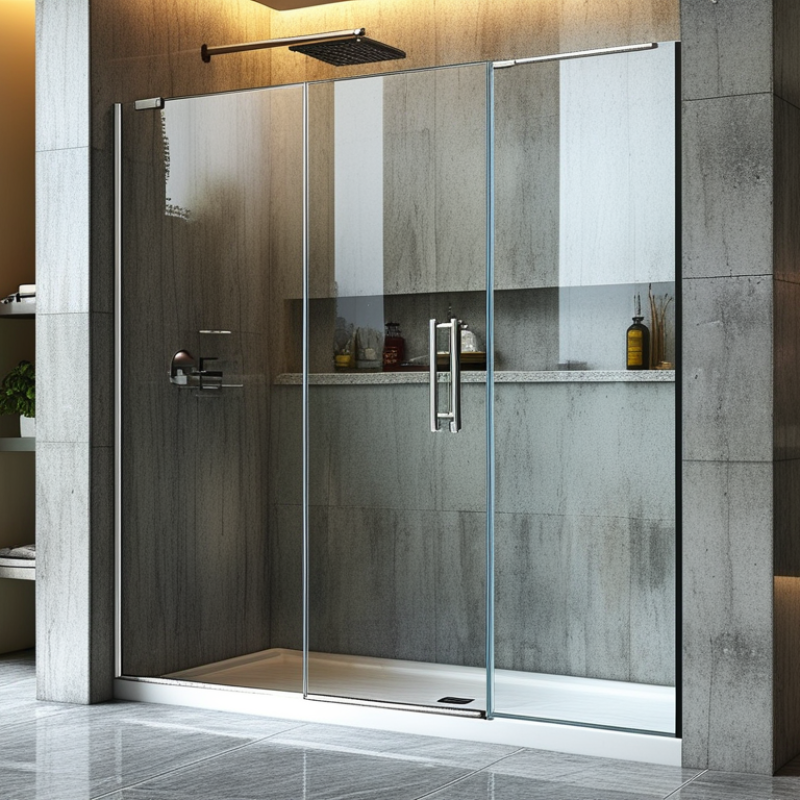
Define Your Bathroom Layout and Showering Needs
Before choosing a shower with glass doors, define your bathroom layout precisely. Measure the room’s length, width, ceiling height, and available doorway clearance. Record the toilet, vanity, radiator, and plumbing positions. Mark the proposed door swing with masking tape on the floor. This simple step can reveal a collision before installation begins.
Think about how the shower will be used every day. A single user may prefer a compact enclosure, while two users may need more elbow room. Children, older adults, or anyone with limited mobility may benefit from a wider entrance and fewer thresholds. Keep bottles within reach, but avoid placing shelves where they narrow the entry. Wet floors are a practical concern, not just a design issue.
The shower’s location also affects splash control. A fixed glass panel may work well in a spacious layout, but a tighter room may need a sliding or inward-folding door. Check the door hardware against nearby walls and fixtures. Confirm drainage, ventilation, and local building requirements with a qualified installer. I would not rely only on a beautiful drawing. Real movement matters. Step into the taped outline, turn, reach, and imagine cleaning the glass weekly. Small planning errors can become daily frustrations.
Compare Glass Door Types and Opening Configurations
Choosing a shower with glass doors starts with the opening configuration, not the finish. In my site measurements, a door that looked elegant often failed because the toilet blocked its swing. Hinged doors need a clear arc, usually opening outward for safer access. Pivot doors need less side clearance and suit compact layouts. Sliding doors save floor space, but their tracks collect soap residue and need regular cleaning.
Fixed panels create a clean, open entry. They work best when the shower is wide enough to control spray. They are less suitable for narrow rooms or powerful showerheads. Frameless glass offers a lighter appearance, while framed systems can provide stronger alignment and easier adjustment. Choose tempered safety glass that meets recognized safety standards. Thicker glass feels more stable, but hardware quality and wall support matter too.
The 2024 U.S. Houzz Bathroom Trends Study reported that 78% of renovating homeowners upgraded their shower area. That demand makes careful comparison important. The 2024 NKBA Design Trends Report also highlights wellness and aging-in-place needs, which support wider entries and low-threshold designs. Measure the finished walls, not the rough opening. Allow space for handles, seals, and cleaning access. A sliding door may seem practical, yet a poorly leveled track can cause water leakage. I have seen this happen. Recheck the slope, swing path, and daily user habits before choosing the glass type.
Select Suitable Glass, Hardware, and Safety Features
How to Choose a Shower with Glass Doors?
Choosing a shower with glass doors starts with the room, not the handle style. Measure the opening, wall alignment, and floor slope before ordering any panel. A qualified installer can identify weak framing, wall movement, or hidden plumbing that measurements may miss. For most homes, safety-rated tempered glass is a practical choice. Laminated glass offers added protection, but it can cost more and look visually heavier. Consider privacy, too. Clear glass creates an open feeling, while textured glass hides silhouettes and water marks.
Select corrosion-resistant hardware designed for constant moisture. Hinges must match the glass thickness and door weight. Solid handles feel stable, while small knobs may suit narrow spaces. Check that seals sit evenly and the door avoids nearby fixtures. I once underestimated clearance around a vanity. The door worked, but daily use felt awkward. Safety comes first. Look for smooth edges, secure anchors, stable walls, and an easy-to-reach release path. Never expect glass to correct an uneven enclosure.
Tips: Measure twice before ordering. Ask the installer about glass certification, hardware maintenance, and seal replacement. Keep the bottom edge away from standing water. Review installation instructions and local building requirements with a qualified professional. Small gaps become leaks.
Check Installation Requirements and Water Management
Choosing a shower with glass doors starts with the room, not the glass. Measure the opening at the top, middle, and bottom because walls are rarely perfectly square. Check the ceiling height, plumbing position, and available space for the door swing. A hinged door needs clear floor area, while a sliding design may suit a narrow bathroom. I once measured only the widest point and created an installation problem. That mistake was avoidable.
Inspect the wall structure before ordering anything. Heavy glass doors need secure fastening into studs or properly reinforced framing. Tile alone is not a reliable anchor. Confirm that the shower base is level and that the floor slopes gently toward the drain. The curb should direct water inward, not toward the bathroom floor. Small errors matter. Water finds them.
Waterproofing must continue behind the finished surface. Use an approved membrane around corners, joints, and plumbing penetrations. Sealant at the bottom of the glass helps, but it cannot repair poor drainage or missing waterproofing. Leave enough clearance for the door sweep and check that it does not scrape the curb. Follow local building requirements for safety glass, ventilation, and electrical separation. A qualified installer can verify these details, although even professionals should recheck measurements before drilling. The final fit may look simple, but reliable water management depends on several hidden layers.
Set a Practical Budget and Choose a Reliable Supplier
How to Choose a Shower with Glass Doors?
A practical budget should cover more than the glass panel. Include hardware, delivery, installation, waterproofing, and possible wall repairs. The 2024 U.S. Houzz Bathroom Trends Study reported that 84% of renovating homeowners upgraded their shower areas. Demand is strong, but prices vary widely by size and construction. Start with the opening.
For a clear estimate, measure the width, height, wall condition, and door swing before requesting quotes. Frameless glass usually costs more because it needs precise measurements and stronger hardware. Semi-frameless designs may reduce spending without looking too heavy. The 2022 NAR Remodeling Impact Report estimated a 71% cost recovery for bathroom renovations, but this is not a promise for every property. Resale value depends on location and workmanship.
Supplier reliability deserves its own budget line. Ask for written glass thickness, safety certification, hardware material, warranty terms, and installation scope. Tempered safety glass should meet recognized standards, such as ANSI Z97.1 or CPSC 16 CFR 1201. Check recent project photos and request references from completed installations. A low quote may exclude sealing or leveling. That omission can become expensive. My budget rule is imperfect: keep 10% to 15% for surprises, especially in older bathrooms. Get it written.
How to Choose a Shower with Glass Doors?
Set a practical budget first, then compare suppliers based on installation requirements, glass quality, hardware durability, warranty coverage, and measurement accuracy.
The figures show indicative U.S. installed planning ranges. Actual costs vary by enclosure size, glass thickness, bathroom preparation, labor rates, hardware, and local regulations. Request a detailed written quotation before selecting a supplier.