
top of page

How to Choose Pink Clothing Donation Bins in 2026

Choosing Pink Clothing Donation Bins in 2026 takes more than picking a bright color. A bin must protect clothing from rain, stay easy to use, and explain clearly what donors can leave. Orsola de Castro, co-founder of Fashion Revolution, is widely associated with this reminder: “The most sustainable garment is the one already in your wardrobe.” That idea matters here. A donation bin is useful only when it helps wearable clothing reach a responsible next use.

Look closely at the details. Is the opening wide enough for a folded bag, but designed to discourage items from getting wet? Can people read the donation instructions from the sidewalk? Are the bin’s location, collection schedule, and responsible organization clearly identified? Ask how often the bin is checked and what happens to unsuitable items. A polished finish means little if the bin overflows. Not just color.

In this guide, we’ll compare practical features, materials, placement, maintenance, and provider transparency. We’ll also consider how pink can make a bin visible without making its purpose unclear. It is tempting to judge by appearance alone. That is a weak shortcut. A sturdy bin with plain, readable instructions may serve donors better than a more eye-catching one. Some choices will depend on your site, foot traffic, and local needs. There is no perfect bin for every location, and that deserves a second look before purchase.
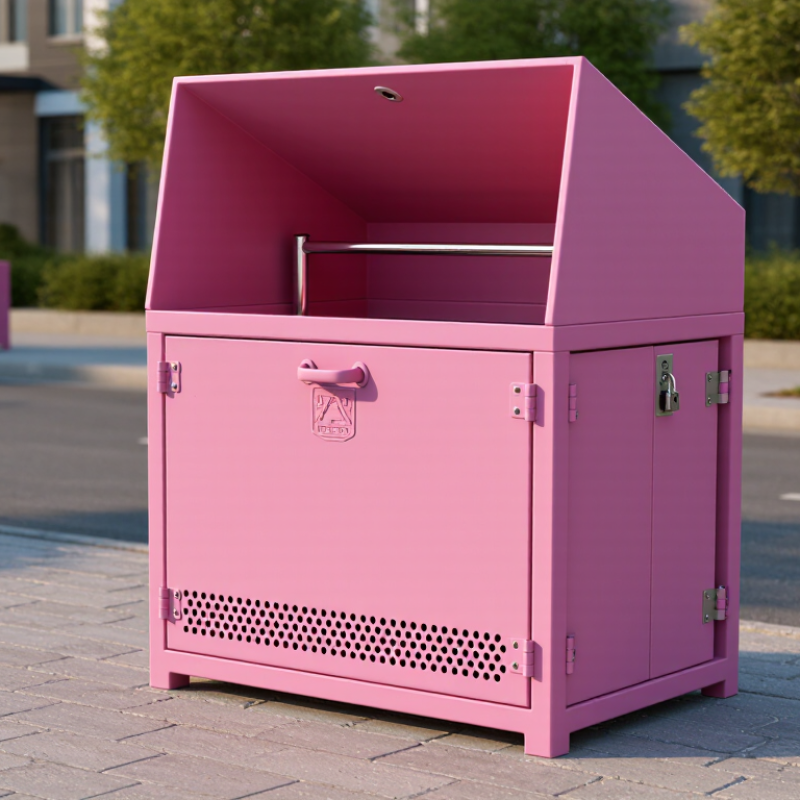
How to Choose Pink Clothing Donation Bins in 2026

Define the Purpose and Donation Model of a Pink Clothing Bin

A pink clothing bin should have a clear purpose before its color or placement is chosen. Decide whether it collects wearable garments for direct reuse, resale that supports a stated community program, or textiles for fiber recovery. These are different donation models, with different sorting needs and outcomes. The U.S. Environmental Protection Agency’s Advancing Sustainable Materials Management: 2018 Fact Sheet estimated that 17 million tons of textiles were generated in the United States that year; 2.5 million tons were recycled, while 11.3 million tons went to landfill. The figures are dated, but they show why collection alone is not proof of impact.

Make the model visible on the bin. State which clean, dry items are accepted, what happens after collection, and how donors can ask questions. A sign that says “clothing donations” may leave people guessing about shoes, damp coats, or torn fabric. Set a pickup schedule and confirm that the downstream sorting partner can handle the expected volume. A full bin beside a rainy sidewalk is a poor system, even if the intention is good. I would review the model after a few weeks; actual donation patterns may not match the plan.

Tips: Track weights, overflow, and the share suitable for reuse. Post a contact method and collection date. Keep instructions short and specific.

How to Choose Pink Clothing Donation Bins in 2026: Define the Purpose and Donation Model

U.S. EPA estimates show that, in 2018, about 2.5 million tons of textiles were recycled, compared with 11.3 million tons sent to landfill. These figures cover textiles overall—not clothing collected by donation bins. When choosing a bin, check whether its stated purpose is reuse, resale, or textile recycling, and ask how collected items are sorted and where they go.

Source: U.S. EPA, Textiles: Material-Specific Data (2018 estimates; million U.S. tons).

Compare Bin Materials, Capacity, Weather Resistance, and Security

Choosing a pink clothing donation bin starts with its location and collection schedule. Powder-coated steel can resist dents and rough handling, but scratches may expose metal to rust. UV-stable plastic avoids rust and is easier to move, though it may crack under impact. Check hinges, seams, and the deposit opening, not just the main panels. Small details matter.

Match capacity to expected donations and pickup frequency. A bin near a busy car park may fill faster than one beside a quiet community hall. Measure the site, including space for collection vehicles and safe access around the doors. Bigger is not always better. An oversized bin can look neglected when donations are sparse, while a small one may overflow between collections. That estimate may need adjusting after a few weeks of use.

Weather resistance deserves a close look. Ask whether the lid sheds rain, seams are sealed, and the base allows water to drain without soaking clothing. For security, look for a reinforced deposit slot, a lockable collection door, and anchor points suited to the surface. Test the lock before installation; a sturdy-looking door can still have a weak latch. Pink paint also needs to stay visible and clean, so request care instructions and inspect the finish periodically. I would not assume any bin is fully weatherproof without checking its construction.

How to Choose Pink Clothing Donation Bins in 2026 — Compare Bin Materials, Capacity, Weather Resistance, and Security
Bin Material Typical Capacity Range Weather Resistance Security Considerations Pink Finish Considerations Best Suited For
Powder-coated steel Approximately 300–1,000 L, depending on dimensions and design Good when the coating is intact. Scratches or chips can expose steel to moisture and allow rust to develop; inspect and repair damaged areas. Rigid construction can support a lockable access door and tamper-resistant hinges. Security depends on the door, lock, fixing method, and installation—not the material alone. Pink is usually applied as a coating. Ask about outdoor UV resistance and touch-up options; fading and coating damage are possible with prolonged exposure. Sites that need a sturdy bin and can monitor the finish for damage.
Galvanized steel Approximately 300–1,000 L, depending on dimensions and design Zinc coating helps protect steel from corrosion. Cut edges, deep scratches, and prolonged exposure to harsh conditions can still require attention. Can be built with lockable panels and reinforced openings. Check that seams, hinges, and anchoring points are not easy to manipulate. A pink exterior finish may be added over the galvanized surface. Confirm that the paint system is compatible with the metal and intended for outdoor use. Outdoor locations where corrosion protection and a durable metal enclosure are priorities.
High-density polyethylene (HDPE) Approximately 200–800 L, depending on the molded design Does not rust and tolerates moisture well. For long-term outdoor use, choose a UV-stabilized grade because sunlight can degrade some plastics over time. Plastic walls may be easier to cut or force than heavy steel. Look for reinforced doors, protected hinges, a secure lock, and a way to anchor the bin. Color can be molded into the plastic, which avoids a painted surface that can chip. Check that the material is UV-stabilized to help limit fading. Locations where low maintenance, moisture resistance, and a colored-through finish are useful.
Fiberglass-reinforced plastic (FRP) Approximately 300–900 L, depending on panel thickness and design Resists moisture and will not rust. Outdoor performance depends on the resin, UV protection, construction quality, and upkeep. A rigid enclosure can include lockable access points, but the door and frame need reinforcement. Confirm that the bin can be securely anchored. Pink gelcoat or exterior paint may be available. Ask about UV protection and repair procedures for cracks, chips, or surface wear. Outdoor installations needing a non-rusting enclosure and a shaped or customized appearance.
Selection note: Capacity ranges are approximate examples, not standardized ratings. Actual capacity varies with the bin’s dimensions and opening design. Compare lock and anchoring details, drainage, weather protection, and UV-resistant pink finishes for the specific model and installation site.

Assess Site Placement, Accessibility, and Local Permit Requirements

A pink clothing donation bin should be easy to spot without blocking a sidewalk, doorway, or parking space. Look for a level, well-drained surface with enough room for people to approach and open the collection hatch. Keep the route clear for wheelchairs, strollers, and delivery carts. Small details matter. A bin beside a puddle or behind parked cars may be less usable, even when the site seems convenient.

Check the location at different times of day. A spot that feels accessible at noon may be poorly lit after work or crowded on weekends. Avoid placing the bin where it narrows a walkway or interferes with emergency and service access. Leave space around it for collection vehicles, but do not assume a large vehicle can safely turn in every lot. Measure the approach and test the route on foot.

Local requirements vary, so contact the relevant planning, public works, or waste services office before installation. Ask whether the site needs zoning review, a placement permit, specific signs, or scheduled inspections. Get written permission from the property owner, and confirm who handles overflowing donations and litter. Rules can be easy to misread, especially when a bin sits near a public sidewalk. Verify the exact boundary and keep a record of approvals; a quick phone answer may not cover every condition.

Check Collection Schedules, Maintenance Plans, and Donation Transparency

Pink donation bins can be useful only when collection is dependable. Before placing one, ask who empties it and how often. A posted schedule should list days, not vague promises such as “regularly.” Check whether holiday changes are shared and who responds if bags pile beside the bin. A full container exposes clothing to weather and makes donations harder to protect. Look closely. The slot should close securely, labels should remain readable, and the surrounding pavement should be clear. Take a dated photo during routine checks; it can reveal whether overflow repeats after rain or busy weekends.

Maintenance needs an owner, not just a plan on paper. Ask who removes litter, repairs a jammed door, and reports damage. Set a response window that can be checked. That matters. Donors also deserve clear information about where clothing goes, whether items are reused, resold, or recycled, and how any proceeds are handled. Request a written explanation and a way to verify collections, such as dated logs or weight records. A bright pink finish may help people spot the bin, but it proves nothing about responsible handling. I once treated a neat exterior as reassurance; that was too quick. Inspect the details, then revisit the arrangement after the first month.

Choose a Bin Design That Fits Your Budget and Sustainability Goals

When choosing a pink clothing donation bin in 2026, compare the full cost, not just the purchase price. A lightweight unit may fit a tight budget, but frequent repairs can erase the savings. Check the frame, door hinges, weather protection, and expected service life. A bin placed outdoors needs a stable base and a finish that can handle rain and strong sunlight. Measure the site, too. A beautiful bin that blocks a walkway is a poor fit.

Tips: Ask suppliers for material details, repair options, and end-of-life guidance. Recycled metal or durable recycled plastic may support sustainability goals, but only when the bin lasts and can be maintained. Request a written estimate that includes delivery, installation, and upkeep. Small print matters.

Match the design to how people will use it. Clear clothing-only signage, a reachable opening, and a simple way to report a full bin can reduce confusion and overflow. Pink can make the bin easy to spot, though the shade should remain readable beside its labels. One trade-off is easy to miss: a cheaper design may use replaceable parts that are hard to source. Ask before buying. I would also leave room in the budget for cleaning; even a sturdy bin can look neglected when dust gathers around its base.

S O C I A L 

  • Facebook
  • Instagram
  • Pinterest

©2022 by LaFata Cabinets. Proudly created with Wix.com

bottom of page