
top of page

7 Tips for Choosing a Stainless Shower Door

Choosing a Stainless Shower Door is not only about shine. The right model must fit the opening, suit daily routines, and handle moisture without making cleaning harder. A frame that looks slim in a showroom may feel bulky beside a narrow vanity. Small details matter. Measure the finished opening at several points, because walls and floors are rarely perfectly square. Also check where the showerhead sprays and how much clearance a swinging door needs. These simple checks can prevent costly surprises.

Stainless steel can provide a durable, clean-lined frame, but performance depends on its construction, finish, hardware, and installation. Ask the seller about the steel grade and care requirements rather than assuming every “stainless” finish will age the same way. Compare glass thickness, hinge design, seals, handle comfort, and available replacement parts. A sliding door may save space, while a hinged design can offer a wider entrance; neither suits every bathroom. Consider who uses the shower, how often the glass will be cleaned, and whether the floor can manage splashes. There is no universal best choice. I’d weigh everyday convenience more heavily than a showroom-perfect appearance, though that is easy to forget when finishes catch the light. The seven tips ahead will help you compare practical features, ask informed questions, and choose a door that fits your space as well as your budget.
7 Tips for Choosing a Stainless Shower Door

Identify Shower Door Types and Match the Design to Your Bathroom Layout

7 Tips for Choosing a Stainless Shower Door

Identify Shower Door Types and Match the Design to Your Bathroom Layout

A stainless shower door should fit the room, not just the style board. Sliding doors suit narrow bathrooms because they need no swing clearance. Hinged doors open wider, but require space for the panel and handle. A fixed glass panel creates an open look; check that it contains spray before choosing it. Measure twice. Include trim, towel bars, and the path from the doorway.

The 2024 Houzz U.S. Bathroom Trends Study reports that 84% of renovating homeowners upgraded their shower. That figure signals strong interest, but it does not mean every layout benefits from the same door. For a corner shower, a pivot or hinged door may provide a broad entry. For a tight alcove, a sliding enclosure can keep the walkway clear. The National Kitchen & Bath Association’s 2024 Bath Trends Report also identifies accessible, open shower designs as an ongoing design priority. Curbless entries need careful planning for floor slope and drainage.

Check where water lands when the door opens. A swing panel can strike a vanity or leave droplets on a bath mat. Small detail. Stainless hardware resists corrosion, but finish and maintenance still matter; hard-water spots show quickly on polished surfaces. I would not choose a door from a floor plan alone. Tape the door’s swing on the floor, then test the route with a laundry basket or towel in hand. Sometimes the “cleanest” design feels cramped in daily use.

Compare 304 and 316 Stainless Steel: 18–20% Chromium vs. 2–3% Molybdenum

For a stainless shower door, compare the alloys carefully: 304 and 316 both contain chromium, but their chemistry differs. ASTM A240/A240M lists 304 at 18–20% chromium, while 316 typically contains 16–18% chromium and 2–3% molybdenum. Molybdenum improves resistance to pitting corrosion, especially where chloride exposure is a concern. The Nickel Institute’s technical guidance on stainless steel corrosion also identifies chlorides as a factor that can increase pitting risk. That matters around damp hinges, standing water, and some cleaning residues.

Tip: Match the grade to the room. For a well-ventilated bathroom with routine cleaning, 304 may be adequate. If the shower sees frequent chloride exposure or harsh cleaning, consider 316 and verify the grade on the product documentation. Rinse cleaner from corners. Small residues can linger.

A higher grade is not a cure-all. Look at welds, cut edges, fasteners, and finish quality, since those details affect how the assembled door performs. Honestly, I would not choose by alloy number alone; installation and maintenance are easy to overlook. Ask for a material certificate referencing ASTM A240/A240M, and check that the listed grade applies to the frame and hardware, not just one component.

304 vs. 316 Stainless Steel: Chromium and Molybdenum Content

Typical composition ranges by weight. The bars show the minimum and maximum values for each element.

Grade 304 typically contains 18–20% chromium. Grade 316 typically contains 16–18% chromium and 2–3% molybdenum. Molybdenum improves resistance to pitting corrosion in chloride-containing environments; it is not typically intentionally added to 304. Actual corrosion performance also depends on the environment, fabrication, and maintenance. Composition ranges are typical specification values; verify the applicable product standard.

Verify Safety Glazing Meets ANSI Z97.1 and CPSC 16 CFR 1201

When comparing stainless shower doors, inspect the glass safety markings before judging the handle or finish. The glazing should meet ANSI Z97.1 and applicable CPSC 16 CFR 1201 requirements. These standards address safety glazing performance, including how glass behaves under impact. Ask the seller or installer for documentation if the label is missing or hard to read. A verbal assurance is not a substitute for clear records.

Look near a glass corner for a permanent mark identifying the manufacturer and applicable standard. Confirm that the marking matches the product paperwork and the door configuration you are buying. Tempered glass usually breaks into small pieces, but it can still cause injury. Laminated glass may remain held together after breaking. Neither type makes careless installation safe. Check that the glass thickness and hardware are specified for the opening, not simply described as “heavy duty.”

Measure the opening carefully, and have a qualified installer confirm the fit and support points. Uneven walls can create gaps or put stress on the panel. That detail is easy to overlook. I would also ask how the installer protects glass edges during handling; small edge damage can become a weak point. Standards compliance matters, but it does not excuse poor fit, damaged glass, or loose hinges. If answers feel vague, pause before ordering.

7 Tips for Choosing a Stainless Shower Door — Verify Safety Glazing Meets ANSI Z97.1 and CPSC 16 CFR 1201

Tip Selection Factor What to Check Why It Matters
1 Verify safety-glazing compliance Look for product labeling or documentation confirming compliance with ANSI Z97.1 and applicable requirements of CPSC 16 CFR 1201. Confirm the documentation applies to the specific glass panel and door configuration. Shower-door glass is located where people may contact it. Safety glazing is designed to reduce injury risk if the glass breaks; ordinary, unverified glass should not be substituted.
2 Confirm the glass type and thickness Ask whether the panel is tempered safety glass and verify its specified thickness in the product documentation. Common shower-door options include 6 mm, 8 mm, and 10 mm glass, but availability and suitability vary by design. Glass thickness affects weight, hardware compatibility, and feel. The door system must be designed for the selected panel rather than relying on thickness alone as proof of safety.
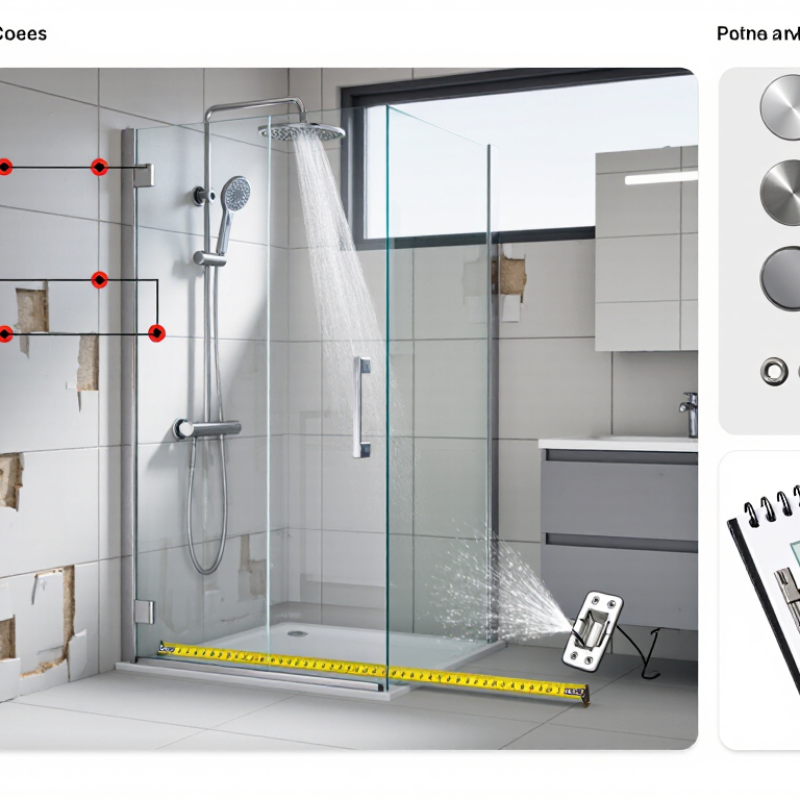
3 Measure the opening carefully Measure the width at the top, middle, and bottom, and check the opening height at more than one point. Record out-of-plumb walls, uneven floors, and any curb or threshold details. Bathrooms are not always perfectly square or level. Accurate measurements help prevent gaps, binding, and installation problems; use the door system’s stated measuring method.
4 Inspect stainless-steel specifications Check the stated stainless-steel grade, finish, and care instructions for exposed hinges, handles, brackets, and other metal parts. Confirm which components are stainless steel and which may use other materials. Bathroom moisture and cleaning products can affect metal surfaces. Clear material specifications and appropriate care help set realistic expectations for appearance and maintenance.
5 Match the door style to the layout Compare hinged, pivot, and sliding configurations. Check the required swing or track space, entry width, nearby fixtures, and whether the door can open without hitting a toilet, vanity, or towel bar. The right configuration depends on the bathroom’s available space and the shower opening. Confirm the manufacturer’s stated clear opening and installation requirements before selecting a style.
6 Review seals and water management Check the included bottom sweep, side seals, and any threshold or water-deflector components. Review the installation instructions for required gaps, slope, and enclosure alignment. Seals help limit splashing but do not make every enclosure completely watertight. Proper installation, suitable shower layout, and directing water away from the opening are also important.
7 Check installation and aftercare requirements Confirm wall backing and substrate requirements, approved fasteners, panel weight, and whether professional installation is recommended. Follow the care instructions and avoid cleaners or tools that may damage the glass or finish. Correct support and installation help keep the door operating as intended. Following care instructions can reduce surface damage and help maintain the glass, seals, and metal hardware.

Choose Glass Thickness: 3/8-Inch and 1/2-Inch Are Common Options

Glass thickness affects the feel, weight, and hardware needs of a stainless shower door. The common choices are 3/8-inch and 1/2-inch glass. A 3/8-inch panel is sturdy enough for many frameless designs and is usually lighter to handle. That can make a difference when the door swings beside a narrow vanity or towel bar. A 1/2-inch panel feels heavier and more substantial, but it also places greater demands on hinges and wall supports.

Thicker is not automatically better.

Check the door’s size and hardware specifications before choosing. A wide panel can be heavy even at 3/8 inch, while a smaller 1/2-inch door may fit a different setup. Ask whether the hinges, handle, and mounting points are rated for the selected glass. Also confirm the shower opening is measured accurately; a small error can affect fit and alignment. One easy assumption to get wrong is that thickness alone prevents wobble. Proper installation matters just as much. A level wall and secure anchors matter. If you are unsure, have an installer assess the opening and hardware together. The choice may be less obvious than it looks.

Measure the Opening, Check Hardware Fit, and Plan Routine Cleaning

Measure the finished opening at the bottom, middle, and top; walls can lean slightly, even when they look straight. Record the narrowest width and check that the sill is level. Then compare those figures with the door’s adjustment range, hinge position, and handle clearance. Leave room for nearby faucets and towel bars. Small gaps matter. A tape measure cannot tell you whether a door will swing freely, so mark its arc on the floor before ordering. If the measurements differ, pause and confirm them rather than averaging the numbers.

Hardware fit affects daily use, but routine care helps preserve the finish. After installation, test the door gently and make sure seals meet without forcing the panel. Wipe stainless hardware with a soft cloth and mild soap, then rinse and dry it. Avoid abrasive pads and cleaners containing chlorine; they can scratch or stain stainless steel. Wipe it dry.

The U.S. EPA’s WaterSense showerhead guidance estimates that efficient showerheads can save a family about 2,700 gallons of water yearly. That figure concerns water use, not shower-door maintenance, but it shows how often a shower gets used—and why a quick wipe-down can be easy to forget.

Even careful routines slip. Check the manufacturer’s care instructions, especially if the finish has a special coating.

S O C I A L 

  • Facebook
  • Instagram
  • Pinterest

©2022 by LaFata Cabinets. Proudly created with Wix.com

bottom of page