What Are the Top 10 Sofa Feet Manufacturers in China?
The furniture industry is large, but its smallest components can shape comfort, stability, and a sofa’s finished appearance. Grand View Research estimated the global furniture market at approximately US$736.6 billion in 2023 and projected continued growth through 2030. That wider market creates demand for dependable hardware, including Sofa Feet made from wood, metal, and plastic.
China remains a major manufacturing and sourcing base. China’s furniture manufacturing enterprises above designated size reported operating revenue of about RMB 655.7 billion in 2023, according to industry figures cited by the China National Furniture Association. This figure covers furniture manufacturing, not Sofa Feet alone. That distinction matters. Supplier claims and market totals should not be confused.
This guide to the top 10 Sofa Feet manufacturers in China is intended to help buyers compare practical factors: material options, production capabilities, customization, quality controls, and export experience. A polished product photo is not enough. Check dimensions, load-bearing details, surface finishes, packaging, and sample consistency before placing a large order. Where public information is limited, that should be acknowledged rather than filled with guesswork. Rankings can change, too; a suitable factory for a hotel project may not fit a small custom order. Small parts matter. The right choice depends on your design, volume, and verification process.
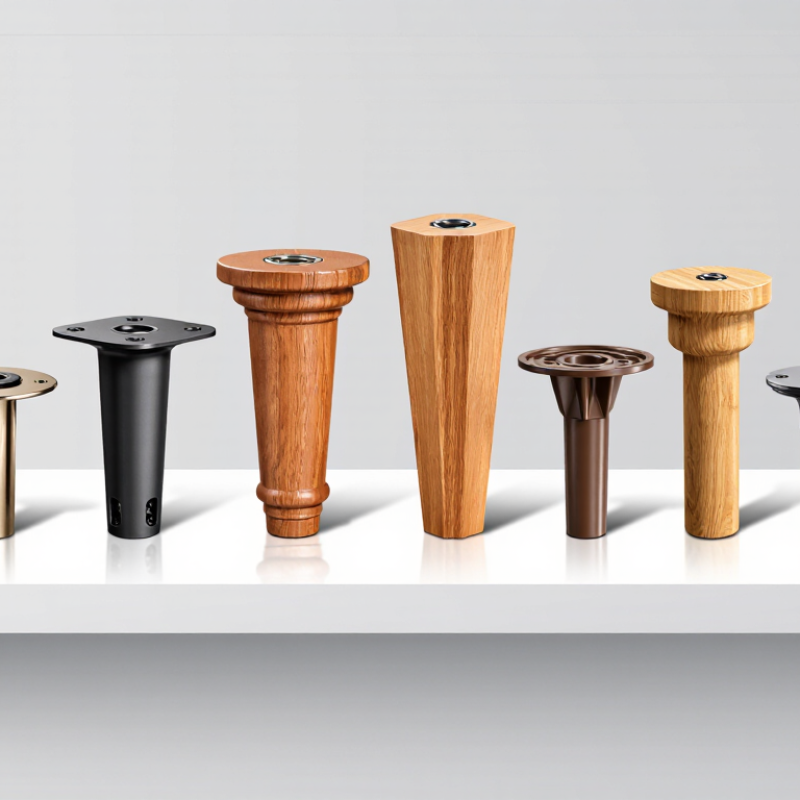
Classify Sofa Feet by Material, Shape, and Standard Dimensions
Sofa feet are commonly classified by material, shape, and height. Solid wood offers a warm grain and can be stained; steel or aluminum suits slim profiles and higher-load designs. Plastic feet are light and moisture-resistant, though they may feel less substantial. Shapes include tapered, straight square, round, bun, and sled styles. Small details matter: a tapered foot can look delicate, while a wide square foot gives a low sofa a more grounded appearance.
Grand View Research estimated the global furniture market at USD 541.52 billion in 2023, reflecting a broad and competitive supply chain; that figure is not specific to sofa feet. There is no single universal sofa-foot dimension. In supplier catalogs, 100–150 mm heights are common replacement choices, while taller options can raise seat height and alter balance. Check the mounting plate, screw spacing, and stated load capacity against the sofa frame. A foot that looks right may not fit.
Standard dimensions vary. ISO 7173 covers strength and durability testing for chairs, not a universal sofa-foot size, so buyers should not treat it as a sizing rule. Measure all existing feet, including threaded inserts, and confirm the floor clearance. A small caveat: catalog measurements may describe the foot alone, not the installed height. Check that before ordering.
Set Key Metrics: Load Capacity (kg), MOQ, and Lead Time
When comparing sofa feet manufacturers in China, set three measurable filters before requesting quotations: load capacity, minimum order quantity, and lead time. Ask whether capacity applies to one foot or a complete sofa. That distinction matters. A foot rated at 150 kg does not automatically mean four feet safely support 600 kg. Frame design and uneven floors affect the result. Request the test method, sample condition, and written rating.
For load capacity, share the sofa’s expected weight, seating capacity, attachment style, and floor type. Ask suppliers to test finished feet with the proposed screws or mounting plates, not bare material alone. Keep a safety margin. Real rooms are messy. For MOQ, compare standard finishes with custom heights, colors, and tooling. A low MOQ may apply only to stocked items. Custom plating or packaging can require larger quantities. Confirm whether mixed models count toward one order.
For lead time, ask when the clock starts: deposit, drawing approval, or sample sign-off. Request separate estimates for samples and bulk production, plus packing time. Get these details in writing. Add a buffer for revisions or material delays. I have seen schedules look precise on paper, yet small finish changes still cause confusion. A clear approval record helps both sides track what is ready to ship.
Profile 10 Chinese Manufacturers by Product Range and OEM/ODM Capacity
A useful comparison of ten Chinese sofa-feet manufacturers starts with what they can actually make. Their product ranges may include tapered wooden legs, turned hardwood feet, metal hairpin frames, cast-alloy supports, stainless-steel legs, plastic glides, and adjustable leveling feet. Some focus on standard shapes and stocked finishes. Others can vary height, mounting plates, color, or surface texture for a furniture project. Small details matter: a plate’s hole spacing can decide whether a leg fits an existing sofa frame.
OEM and ODM capacity differs just as much. One factory may produce customer drawings and samples, while another can help revise dimensions, select materials, and develop a new shape. Ask about minimum order quantities, sample lead times, finish consistency, and packaging options. Request drawings and a physical sample before approving a large run. Look closely at welds, threaded inserts, and the underside of wooden feet. Not glamorous, but useful. A supplier with many catalog items may still have limited design support, and polished product photos do not prove production consistency. That distinction is easy to miss. Compare each manufacturer’s documented capabilities against your sofa’s load needs, installation method, and target finish.
Top 10 Sofa Feet Manufacturers in China: Product-Range Material Reference
Typical density of materials commonly used for sofa feet, in kilograms per cubic metre (approximate).
Density is a material property, not a measure of product quality or manufacturing capability. Actual values vary by wood species, alloy, and material grade. This chart does not rank or represent specific manufacturers.
Compare Corrosion Resistance Using ISO 9227 Salt-Spray Test Hours
For a credible comparison of ten Chinese sofa-feet manufacturers, request ISO 9227 neutral salt-spray results for the same material and finish. ISO 9227:2022 defines salt-spray test methods; it does not set one universal pass-hour threshold or predict years of indoor service. Compare like with like. Ask for the tested coating system, sample preparation, exposure hours, and failure criteria. A useful buyer-defined schedule might include checks at 240, 500, and 1,000 hours. These are screening points, not ISO guarantees. Record red rust, blistering, and corrosion creeping from cut edges. Tiny details matter.
The NACE IMPACT study estimated corrosion costs at US$2.5 trillion globally, or 3.4% of global GDP. That figure covers many industries, not sofa hardware, but it shows why coating control deserves attention. For a supplier shortlist, request dated laboratory reports and photographs, then confirm whether samples came from routine production. A polished test coupon can look reassuring. It may not represent a welded foot with sharp corners. Salt spray is useful, but imperfect: results depend on specimen preparation and do not translate directly into real-world lifespan. I would also inspect coating thickness and finish consistency. One awkward point remains: a high-hour result alone cannot prove a part will resist every home environment.
What Are the Top 10 Sofa Feet Manufacturers in China? - Compare Corrosion Resistance Using ISO 9227 Salt-Spray Test Hours
Data integrity note: This is a comparison template, not a verified ranking of manufacturers. No supplier-specific ISO 9227 test reports or test-hour results were provided, so results are marked “Not publicly verified” rather than estimated. ISO 9227 specifies salt-spray test methods; it does not set one universal pass/fail duration for sofa feet.
For a valid comparison: Confirm that each report identifies the tested sofa-foot material and finish, the ISO 9227 method used (such as NSS, AASS, or CASS), exposure duration, evaluation criteria, and any visible corrosion or coating defects. Test hours from different methods or different sample constructions should not be treated as directly equivalent.
Verify Dimensional Tolerances, Coating Thickness, and Certifications
When comparing the top 10 sofa feet manufacturers in China, request a dimensioned drawing before reviewing a sample. Check overall height, mounting-hole spacing, thread size, and the flatness of each foot’s base. A difference of just a few millimeters can cause wobbling or uneven clearance under a sofa. Ask how the supplier measures tolerances and whether inspection records cover finished parts, not only tooling. A digital caliper helps with basic checks, but fit testing on the actual frame matters too. Small details count.
Coating thickness deserves the same attention as appearance. Request a stated target range and a recent test record, then confirm the measurement method suits the coating and substrate. For plated or painted finishes, inspect edges, corners, and hidden surfaces; thin spots often show there first. Ask for relevant certifications and verify their scope, issuing body, and validity directly. A certificate alone does not prove that every batch meets your specification. Request lot traceability and reports linked to the sample or production run. I have seen neat samples hide inconsistent mass production; it is an easy assumption to make, and a costly one.