
Top 10 Large Outdoor Ceramic Flower Pots to Buy?
Large outdoor planters can turn a bare entrance, balcony, or patio into a more welcoming space. Ceramic offers rich glazes, substantial shapes, and a finish that can complement both modern and traditional homes. Yet appearance is only part of the decision. A pot that looks generous in a product photo may feel oversized beside a narrow doorway, while a beautiful glazed finish may need more careful handling outdoors.
This guide to the Top 10 Large Outdoor Ceramic Flower Pots to Buy compares options by size, style, drainage, and practical use. When considering ceramic flower pots large outdoor spaces can accommodate, check the pot’s dimensions, weight, and drainage details before buying. Think about where it will sit, how easily you can move it, and whether it suits the plants you have in mind. Weight matters. Large ceramic containers can be difficult to reposition once filled with soil, so a sheltered, level spot is worth planning for. Looks matter. But no pot is perfect. Product details and outdoor conditions vary, and a container that works well on one patio may not suit another. The aim here is to make those trade-offs clearer, so you can choose a planter that feels right in your space and remains practical after the first season.
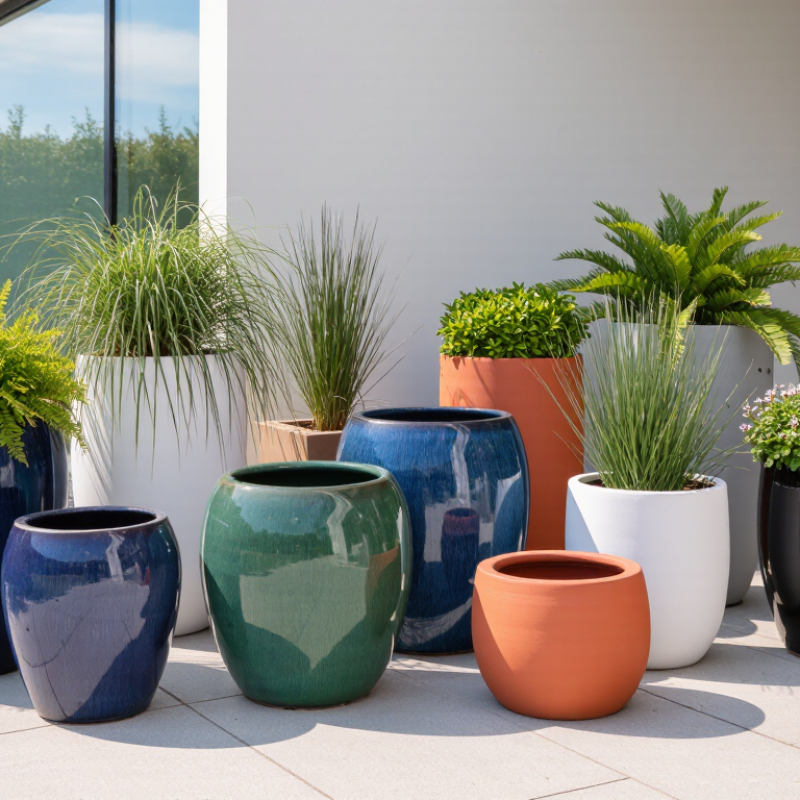
Understanding Large Outdoor Ceramic Flower Pots and Their Uses
Large outdoor ceramic flower pots bring color and structure to patios, entryways, and garden corners. Their weight helps them stay steady in breezy spots, while glazed surfaces can make foliage stand out. That matters. Still, ceramic is not automatically the best choice for every location.
Check the pot’s drainage opening before planting. Without one, excess water can collect around roots after heavy rain. Add a suitable saucer only where standing water will not damage the surface below. Measure the planting area, too: a wide pot needs room for leaves and safe access for watering. A little space helps.
Large pots suit small trees, ornamental grasses, and mixed seasonal flowers. Use a quality potting mix rather than dense garden soil, which may hold too much water in a container. In cold climates, repeated freezing and thawing can crack some ceramic pots, especially when their soil stays wet. Not always. Moving a heavy planter under cover may be difficult, so consider its location before filling it. Check the pot’s weight, drainage, and exposure to weather together; one attractive detail rarely tells the whole story.
| No. | Pot Style | Typical Dimensions (Diameter × Height) | Approx. Capacity | Best Suited For | Outdoor Use Notes |
|---|---|---|---|---|---|
| 1 | Wide bowl planter | 20–24 × 9–12 in (51–61 × 23–30 cm) | 15–30 gal (57–114 L) | Shallow-rooted annuals, succulents, and mixed seasonal displays | Its broad surface dries relatively quickly; use a drainage hole and avoid leaving the bowl in standing water. |
| 2 | Tall tapered planter | 16–20 × 24–30 in (41–51 × 61–76 cm) | 18–35 gal (68–132 L) | Small shrubs, ornamental grasses, and upright foliage plants | A narrow base can make it top-heavy. Position it in a sheltered spot or add stable weight at the bottom. |
| 3 | Classic round planter | 18–24 × 16–22 in (46–61 × 41–56 cm) | 15–35 gal (57–132 L) | Compact shrubs, herbs, and mixed plantings | The rounded profile suits a wide range of plants. Confirm that the pot has an open drainage hole. |
| 4 | Large cylinder planter | 18–24 × 24–30 in (46–61 × 61–76 cm) | 25–45 gal (95–170 L) | Small trees, tall grasses, and statement plants | Its deeper soil volume can hold moisture longer. Check drainage regularly, especially in rainy weather. |
| 5 | Rectangular trough | 30–36 × 12–18 × 12–16 in (76–91 × 30–46 × 30–41 cm) | 20–40 gal (76–151 L) | Herbs, low-growing flowers, or a row of compact plants | Several drainage holes help water escape along its length. Its weight can make repositioning difficult once filled. |
| 6 | Bulbous jar planter | 20–26 × 22–30 in (51–66 × 56–76 cm) | 25–50 gal (95–189 L) | Small shrubs and specimen plants with moderate root systems | The narrow opening may make planting and later root removal harder. Check that the opening is wide enough for the intended plant. |
| 7 | Low, broad urn | 22–28 × 14–20 in (56–71 × 36–51 cm) | 20–40 gal (76–151 L) | Patio focal points, flowering plants, and compact arrangements | Broad shapes can catch wind-driven rain. Use a level, stable surface and keep the drain unobstructed. |
| 8 | Square planter | 18–24 × 18–24 in (46–61 × 46–61 cm) | 15–35 gal (57–132 L) | Small trees, structured plantings, and patio corners | Flat sides sit neatly against walls, but leave enough clearance for airflow and water to drain away. |
| 9 | Pedestal-style planter | 18–24 × 24–32 in (46–61 × 61–81 cm) | 12–30 gal (45–114 L) | Trailing flowers and decorative entrances or terraces | Check that the pedestal and pot are stable together. Avoid placing a heavy filled planter on an unsuitable ledge. |
| 10 | Extra-large tree pot | 28–36 × 24–32 in (71–91 × 61–81 cm) | 45–90 gal (170–341 L) | Small patio trees and large shrubs suited to container growth | Allow for the substantial weight of wet soil. Choose a frost-resistant pot where available, and protect ceramic from freeze–thaw exposure. |


