2026 Top Towel Rail Heaters Which One Should You Buy?
Choosing the right Towel Rail Heater in 2026 requires more than comparing polished finishes and online star ratings. A warm-looking bathroom can still hide poor heat output, awkward controls, or rising electricity costs. The best choice depends on room size, towel capacity, heating system, wall space, and daily habits.
John Siegenthaler, P.E., a respected hydronic-heating educator, offers a useful principle: “Design for the load, not the label.” That advice matters here. A compact ladder rail may suit a cloakroom, but it could struggle in a busy family bathroom with several damp towels. A larger model may dry faster, yet consume more energy if it runs continuously. Small details matter.
Think about real mornings.
Can you reach the switch safely? Will the timer match your routine? Does the finish resist moisture, fingerprints, and bathroom cleaning products? For electric models, installation should follow the manufacturer’s instructions and use a qualified professional where required. Water and electricity demand respect.
This guide compares leading 2026 options by heating performance, control features, running practicality, design, and value. It also considers an uncomfortable truth: the most expensive Towel Rail Heater is not automatically the most effective. Some attractive models feel underpowered. Others look basic but deliver reliable, even warmth.
Expect a balanced review, not a perfect verdict. Your bathroom, budget, and towel habits may change the result. The right rail is the one that performs consistently, fits safely, and makes everyday use simpler.
What Is a Towel Rail Heater and How Does It Work?
2026 Top Towel Rail Heaters: Which One Should You Buy?
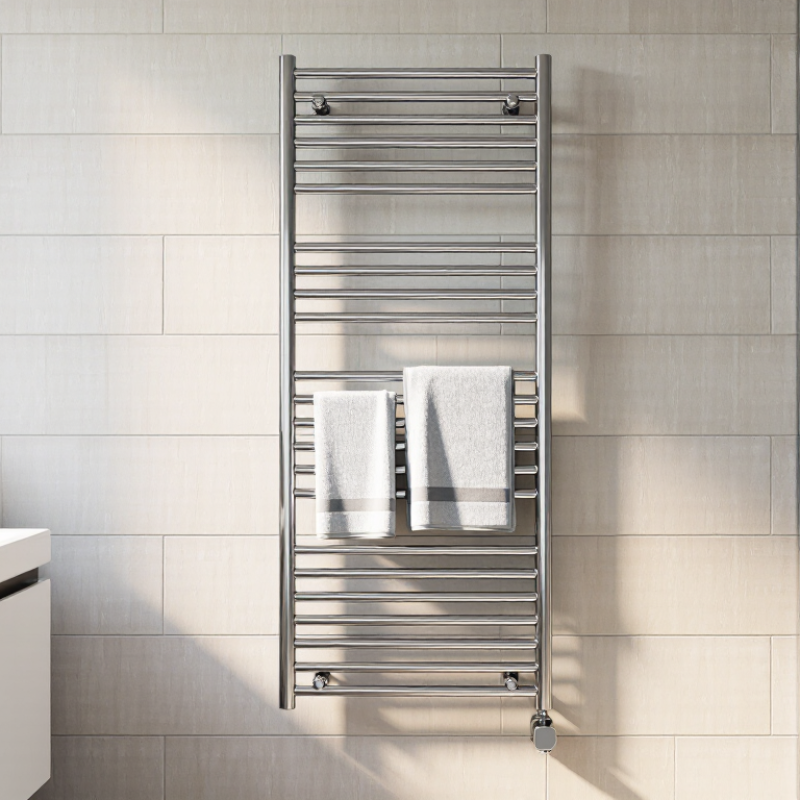
A towel rail heater is a ladder-shaped bathroom appliance that warms towels and, sometimes, the surrounding air. Electric models use an internal resistance element, similar to a sealed heating cable. When electricity passes through it, the element produces heat across the rails.
The U.S. Department of Energy’s Energy Saver guidance states that electric resistance heating converts nearly 100% of incoming electricity into heat at the point of use. That sounds impressive. It does not mean low running costs.
Hydronic models work differently. Warm water flows through the rails from a boiler or central heating system. Their performance depends on water temperature, pipe layout, and heating controls. Electric versions usually offer simpler installation, especially where pipework is unavailable.
Look for a thermostat, timer, and overheat protection.
A 100-watt rail running for four hours uses about 0.4 kWh. Your tariff decides the actual cost.
Small details matter.
Safety needs more attention than appearance. The IEC 60529 standard classifies protection against water and solid particles through IP ratings, but local electrical rules determine suitable bathroom installation zones. Ask a qualified installer to check the location, isolation switch, and earthing.
Energy Saving Trust guidance also encourages timed heating controls because unnecessary operation wastes energy. A heated rail will dry a damp towel. It may not heat a cold bathroom effectively. That is an easy mistake.
For most homes, the sensible choice balances wattage, timer control, installation cost, and realistic drying needs rather than selecting the hottest rail.
How to Choose the Right Towel Rail Heater for Your Bathroom?
Choosing a towel rail heater starts with your bathroom, not its appearance. Measure the wall, door swing, and available clearance carefully. A rail that looks slim online may feel bulky beside a basin. Count how many towels you normally use. Wider rails suit families, while compact models work better in small en-suites. Leave space between rails so damp towels can dry properly.
Heat output matters more than polished metal. Check the heater’s wattage against your room size and insulation. A cold, poorly insulated bathroom may need stronger heating than a warm interior room. Timers and thermostatic controls can reduce wasted electricity. In practice, a morning timer is often more useful than constant heating. Keep it simple.
Safety deserves close attention. Choose a model suitable for bathroom use, with an appropriate ingress protection rating. Installation must follow local electrical rules and bathroom zones. A qualified electrician should confirm the position, wiring, and protective devices. Never place controls where wet hands can reach them unless permitted. I once focused too much on towel capacity and ignored switch placement. That was a poor design choice. Also inspect the finish, mounting brackets, and warranty terms. Loose fittings become irritating quickly. A washable, corrosion-resistant surface is usually easier to maintain in humid air.
2026 Top Towel Rail Heaters Which One Should You Buy? - How to Choose the Right Towel Rail Heater for Your Bathroom?
A practical comparison of common towel rail heater configurations and the specifications that matter most
| Towel Rail Heater Type | Typical Heat Output | Typical Size Range | Warm-Up Time | Best For | Main Advantages | Important Limitations |
| Electric ladder rail | 60–300 W | 500–800 mm wide
800–1,500 mm high | 15–30 minutes | Most bathrooms; independent heating | Works without central heating; simple timer or thermostat control; easy to schedule | Requires safe electrical installation and suitable bathroom zoning approval |
| Hydronic ladder rail | 150–500 W equivalent | 500–750 mm wide
800–1,500 mm high | 30–60 minutes | Homes with wet central-heating systems | No direct electrical heating element; can provide steady background warmth during heating hours | Usually cannot heat towels when the central-heating system is off |
| Dual-fuel ladder rail | 150–500 W equivalent; 60–300 W electric element | 500–750 mm wide
800–1,500 mm high | 15–30 minutes on electric mode | Bathrooms needing year-round flexibility | Uses central heating in winter and electricity independently in warmer months | More complex plumbing and electrical installation; higher installation cost |
| Flat-panel electric rail | 100–250 W | 450–700 mm wide
800–1,200 mm high | 10–25 minutes | Modern bathrooms with limited towel depth | Slim profile; easy to clean; often offers accurate thermostat control | May hold fewer bulky towels than a deep multi-bar ladder rail |
| Freestanding heated rail | 60–150 W | 400–600 mm wide
800–1,000 mm high | 15–30 minutes | Rental homes or bathrooms where wall mounting is unsuitable | Portable; avoids drilling; can be moved or stored | Uses floor space and may provide less capacity than a wall-mounted model |
Key Buying Criteria
| Decision Factor | What to Look For | Practical Recommendation |
| Bathroom size | Small bathrooms generally need less room heating than large or poorly insulated rooms | Choose the rail mainly for towel-drying capacity; use a separate room heater if whole-room heating is required |
| Number of users | Each towel needs enough separated hanging space for air circulation | For two or more users, consider a rail at least 600 mm wide with multiple horizontal bars |
| Energy consumption | Electrical energy use is approximately wattage multiplied by operating hours | A 100 W rail running for 4 hours uses about 0.4 kWh before standby consumption |
| Controls | Timer, thermostat, boost mode, and open-window detection can reduce unnecessary operation | A programmable timer is useful when towels need heating at predictable times |
| Bathroom safety | The enclosure rating and installation location must comply with local electrical regulations | Use a qualified installer and verify the required IP rating for the bathroom zone; IP44 is commonly used for splash-resistant bathroom equipment, but local rules take priority |
| Material and finish | Powder-coated steel, stainless steel, chrome, and brushed finishes have different maintenance needs | Choose corrosion-resistant construction and wipe away standing water in humid or poorly ventilated bathrooms |
| Installation space | Measure wall width, height, pipe or cable position, door swing, and clearance from nearby fixtures | Leave enough clearance for towels to hang freely and check that the rail does not obstruct cabinets, doors, or shower access |
Selection guide: Choose an electric ladder rail for independent operation, a hydronic rail when the bathroom already uses wet central heating, a dual-fuel rail for year-round flexibility, and a freestanding rail when permanent wall installation is not practical. The output, dimensions, warm-up times, and energy figures above are typical ranges for comparable towel rail configurations; exact performance varies with construction, insulation, controls, towel coverage, and installation conditions.
Which Towel Rail Heater Best Fits Your Needs and Budget?
Choosing the best towel rail heater depends on bathroom size, drying habits, and your electricity budget. A compact 60–100 watt model may suit one bathroom and two daily-use towels. A larger 150–300 watt rail dries faster, but it can increase running costs. The International Energy Agency’s Energy Efficiency 2023 report states that buildings used about 30% of global final energy in 2022. Small appliances still deserve careful selection.
Calculate usage before buying. A 100-watt rail running four hours daily consumes about 146 kWh yearly. Your local tariff determines the final cost. Timer controls can prevent overnight operation, while thermostatic control helps avoid unnecessary heating. Heated rails often warm slowly, and advertised drying times may assume good ventilation. Real bathrooms are messier. Damp towels, cold walls, and poor airflow change performance.
Tips: Measure wall space first, then check the rail’s wattage, timer settings, electrical rating, and installation requirements. Energy Saving Trust recommends effective bathroom ventilation to control condensation, so a powerful rail cannot replace an extractor fan. Choose a finish that tolerates moisture, and ask a qualified installer to assess the electrical connection. Spending more on controls may reduce waste, but an expensive model is not automatically the better choice for a lightly used bathroom.
2026 Top Towel Rail Heaters: Which One Should You Buy?
Compare common electric towel rail formats by rated power and estimated annual electricity cost to find the best fit for your bathroom size, drying needs, and budget.
Estimated annual running costs assume two hours of operation per day and an electricity rate of $0.16 per kWh. Compact rails suit smaller bathrooms and lighter towels, while larger or programmable models provide more drying capacity and better scheduling control.