
What Are the Top Types of Wall Cladding?
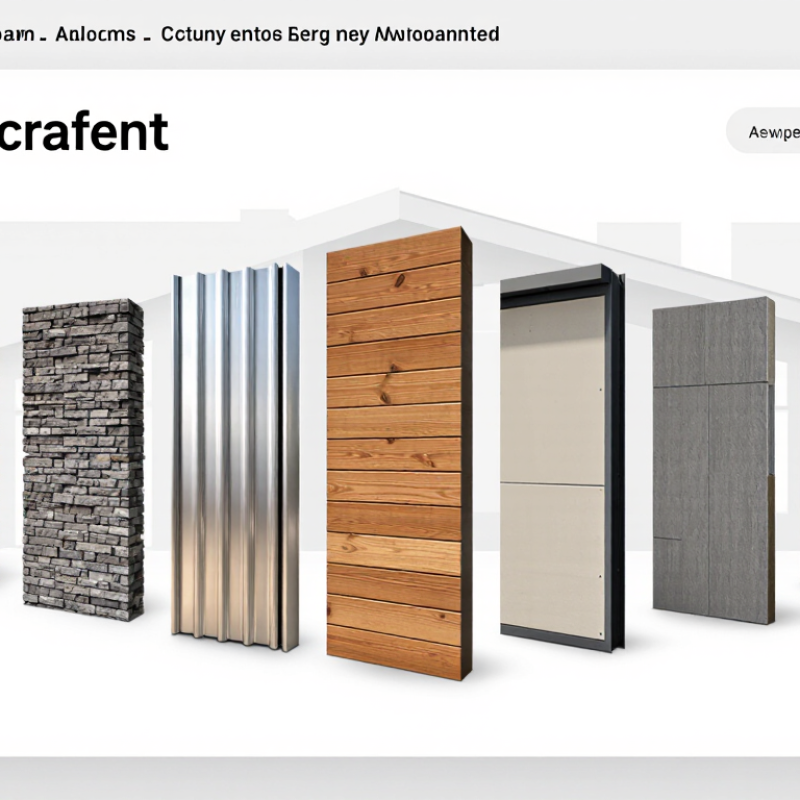
Choosing the right Wall Cladding begins with understanding how each material performs in real conditions. Brick cladding offers durability and thermal mass. Natural stone creates visual weight and can withstand harsh weather. Metal panels provide clean lines, light construction, and efficient installation. Wood adds warmth, but it demands regular inspection and careful moisture control. Fiber cement balances a timber-like appearance with strong resistance to fire, insects, and weathering. Vinyl remains affordable, although its appearance and performance can vary between products.
Dr. Joseph Lstiburek, a respected building scientist, explains, “The perfect wall is one that has all of the control layers outside of the structure.” This principle matters when comparing Wall Cladding systems. A well-designed rainscreen may include a drainage cavity, flashing, and a properly sealed water-resistive barrier. These hidden layers often protect the building more effectively than an attractive outer finish. Look closely at window edges, joints, and the base of the wall. Small installation errors can invite water behind the cladding. That is where expensive damage begins.
This guide examines the top types of Wall Cladding through durability, maintenance, cost, appearance, and climate suitability. It also considers installation quality, because even excellent materials can fail when details are rushed. No material is perfect. That is worth remembering. A stylish panel may fade, while a durable finish may require more skilled labor. The best choice depends on the building, local weather, budget, and long-term expectations.
Brick Cladding: ASTM C216 Absorption Limits and Durability Data
Brick cladding remains a practical wall-cladding choice when moisture resistance and freeze-thaw durability matter. ASTM C216-24 classifies facing brick by exposure grade and measured performance. Grade SW brick allows maximum average absorption of 17 percent. Individual units may reach 20 percent. Its saturation coefficient averages 0.78, with an individual limit of 0.80. These figures come from ASTM C216 testing requirements, using procedures referenced by ASTM C67.
Grade MW permits higher absorption: 22 percent average and 25 percent for individual units. Its saturation coefficient limits are 0.80 average and 0.82 individually. That difference matters in cold, wet climates. Lower absorption usually reduces water available for freezing inside the masonry. However, absorption alone cannot guarantee a durable wall. The Brick Industry Association’s Technical Note 7 emphasizes drainage, flashing, movement joints, and open weep paths. A well-tested brick can still fail behind poorly detailed cladding.
During inspections, dark staining often appears below window corners or beneath blocked weeps. That evidence may indicate drainage problems, not defective brick. Laboratory numbers also need context. Test specimens are controlled, while jobsite mortar joints, cuts, and openings are less predictable. ASTM C216 data should therefore guide specification, not replace field review. I would request certified test results for the selected lot, especially where repeated freezing is expected. Small deviations deserve attention. Masonry performance is rarely perfect.
Natural Stone Veneer: ASTM C568 Density Classes and Water Absorption
Natural stone veneer remains a valued wall cladding option, but limestone must be classified carefully. ASTM C568 groups limestone by density and water absorption, two properties that influence durability and installation decisions.
Low-density limestone has a minimum density of about 110 lb/ft³ and maximum absorption of 12 percent. Medium-density limestone requires approximately 135 lb/ft³ and permits up to 7.5 percent absorption. High-density limestone reaches about 160 lb/ft³, with absorption limited to 3 percent. These values are not decorative labels. They describe how much moisture the stone may hold after exposure. A small error matters.
On site, I examine the current test report before approving veneer for exterior use. I also compare the reported results with the project’s freeze-thaw exposure, drainage design, and anchoring requirements. ASTM C568 addresses limestone dimension stone, not every natural stone product sold as veneer. That distinction is easy to miss. It should not be.
A denser stone may resist moisture uptake better, yet density alone cannot guarantee successful cladding. Veining, bedding planes, finish, thickness, and installation quality also affect performance. Samples can look stable indoors, then develop staining or cracking after repeated wetting and freezing. I have learned to question attractive samples when documentation is incomplete. Quarry changes can also alter absorption results. Request recent laboratory data, verify the stone’s classification, and allow the project engineer to review the complete wall assembly.
What Are the Top Types of Wall Cladding?
Natural Stone Veneer: ASTM C568 Density Classes and Water Absorption
ASTM C568 classifies natural stone by density and sets maximum water absorption limits. Low-density stone has a density below 144 lb/ft³ and a maximum absorption of 12.0%; medium-density stone ranges from 144 to 160 lb/ft³ with a 7.5% maximum; high-density stone exceeds 160 lb/ft³ and has a 3.0% maximum. Lower absorption generally indicates reduced water uptake, although project-specific durability and installation requirements should also be evaluated.
Wood Cladding: 19% Moisture Target and Rainscreen Ventilation
Wall cladding comes in wood, fiber cement, brick, metal, and composite panels. Wood remains popular because it feels warm and ages visibly. Its performance depends less on appearance than moisture control. A practical installation target is about 19% moisture content at fixing. Check boards with a calibrated pin meter. Read several points, not just the driest end. This detail is easy to skip.
Wood should acclimate on site, protected from rain and ground moisture, before installation. The 19% figure is a target, not a universal guarantee. Local climate, species, board thickness, and seasonal conditions can change the safe range. Follow project specifications and applicable building guidance. A rainscreen assembly adds a drained, ventilated cavity behind the boards. Vertical battens create a path for water to escape and air to move. Openings at the base and top need careful detailing. Install flashing above windows and doors. Use insect-resistant mesh without blocking airflow. Keep the cavity continuous around corners where possible.
On a real project, small errors often cause larger movement than expected. Tight butt joints may swell and split after a wet spell. Overly wide gaps can expose the backing layer. Leave movement allowances suited to the profile and climate. Seal cut ends when the specification requires it, especially near splash zones. Inspect after the first rainy season. Look for staining, loose fixings, trapped debris, or dark damp lines. I would not treat 19% as a magic number. It is one measured checkpoint within a wider moisture-management plan.
Metal Cladding: AAMA 2605 Coatings and 40–60-Year Durability Benchmarks
Metal cladding is a strong choice when a wall must resist weather, impact, and visual aging.
AAMA 2605 coatings set demanding performance requirements for color retention, chalking, gloss loss, and film integrity. They are commonly selected for exposed façades, especially in harsh sunlight or coastal environments.
Look closely at the specification.
A 40–60-year durability benchmark is not an automatic warranty. It is an estimated service range shaped by coating quality, metal preparation, panel design, installation, and local exposure.
In practice, I have seen small details matter: cut edges, fastener areas, trapped moisture, and poorly sealed joints can age faster than broad panel faces.
Regular washing removes salt, dust, and industrial deposits before they become a persistent problem. It also makes early defects easier to spot.
Color can still shift gradually. That is normal. A dark finish may show heat stress or fading sooner than a light one, while coastal air can accelerate corrosion at vulnerable points.
Specifiers should request independent test data, coating thickness information, substrate details, and documented maintenance guidance.
The cladding assembly matters as much as the finish. A premium coating cannot correct weak drainage or careless installation.
That distinction matters. Real service life depends on the whole wall, not one impressive number.
Fiber-Cement Cladding: ASTM C1186 Grades and ASTM E84 Fire Ratings
Wall cladding comes in many forms, including metal panels, brick veneer, wood, stone, and fiber-cement sheets. Fiber-cement is valued for its crisp appearance and resistance to rot, insects, and weather exposure. It can imitate painted timber while offering a denser, more stable surface. Still, its performance depends heavily on detailing, especially around joints, corners, and window openings.
ASTM C1186 helps specify flat fiber-cement sheets. Type A generally identifies sheets designed for exterior applications. Type B generally applies to interior applications. The grade also matters. Grade I is typically intended for areas with limited moisture exposure. Grade II is designed for conditions where moisture may occur. These labels should match the project’s location, ventilation, and drainage design. The standard is useful, but the label alone is not enough.
ASTM E84 measures surface burning characteristics, including flame spread and smoke development. A Class A result usually indicates a flame spread index from 0 to 25. Many fiber-cement products achieve Class A performance, but results depend on thickness, coatings, mounting, and the tested assembly. E84 is not a fire-resistance rating. It does not describe how long a wall assembly will resist fire. I would request the complete test report, not just a brochure claim. Small installation changes can matter. A gap behind the panel may affect real performance. Specification reviews should include fasteners, barriers, sealants, and local code requirements.
Article Source:


Fall into Function: How LaFata Cabinets Prepares Your Kitchen for the Cozy Season


Back-to-School Kitchen Refresh: How LaFata Cabinets Can Help You Stay Organized This Fall


