Top Winfort Commercial Smart Locks for Global Buyers
Choosing the right access system requires more than comparing prices and screen features. Global buyers need reliable hardware, clear credentials, and support that continues after installation. This guide introduces Winfort commercial smart locks for offices, hotels, rental properties, warehouses, and mixed-use buildings.
Real performance appears in small moments. A staff member taps an RFID card at 7:30 a.m. A manager checks an entry record from another city. A battery warning arrives before a busy reception door becomes inaccessible. These details show whether a smart lock works beyond a product photograph. Strong systems should support practical access methods, secure user management, audit trails, and straightforward installation.
Compatibility matters.
Door thickness, cylinder type, network coverage, and local safety requirements can vary widely. Buyers should confirm these details before ordering large quantities. Weather exposure also deserves attention, especially for exterior gates and loading areas. Winfort commercial smart locks may suit different commercial environments, but every model should be reviewed against the project’s exact conditions. No lock is perfect. Connectivity can fail, batteries can weaken, and users can make mistakes. A dependable selection therefore includes mechanical backup, emergency procedures, firmware planning, and responsive technical support. Product claims should be checked through specifications, demonstrations, warranties, and verified customer experience. This balanced approach helps purchasing teams compare security, convenience, lifecycle cost, and operational risk with greater confidence.
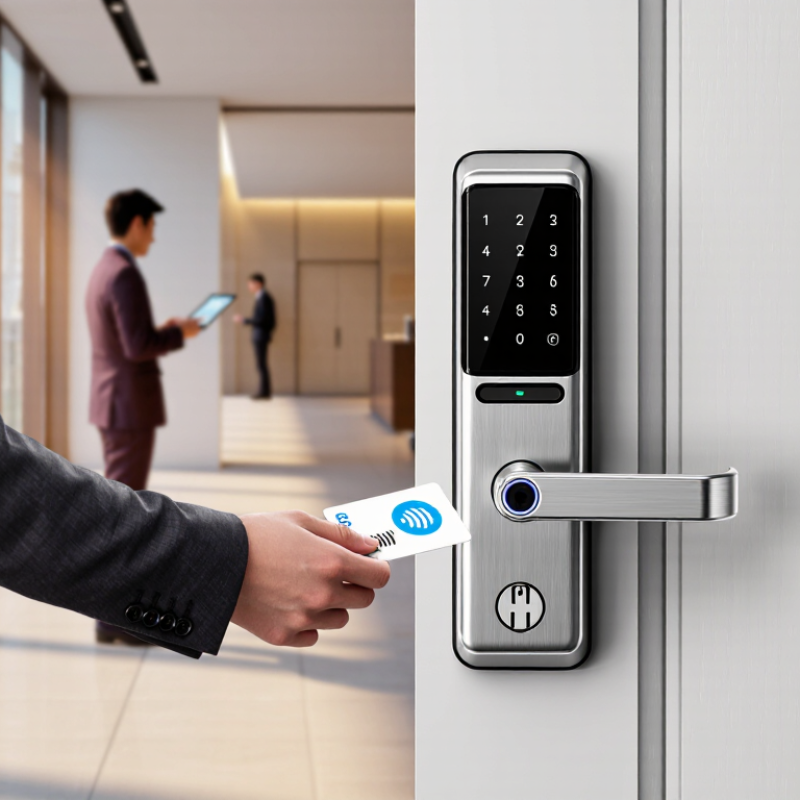
What Are Winfort Commercial Smart Locks?
Commercial smart locks are electronic access devices built for offices, hotels, warehouses, and managed properties. They replace or supplement mechanical keys with mobile credentials, PINs, cards, or biometrics. Administrators can issue access remotely and review time-stamped entry records. This creates clearer accountability at a reception desk or a restricted storage room.
According to MarketsandMarkets’ 2024 Smart Lock Market report, the sector may grow from about USD 2.2 billion in 2024 to over USD 4.4 billion by 2029. That forecast reflects rising demand for connected access, not just convenience. Commercial systems also support role-based permissions, temporary codes, door-status alerts, and integration with property software. A useful lock should still operate during network interruptions.
Security needs careful testing.
NIST guidance on digital identity stresses strong authentication, protected credentials, and lifecycle management. Therefore, buyers should examine encryption, administrator controls, audit-log retention, firmware updates, and emergency access procedures. Battery life matters too. A door may receive hundreds of openings daily, so laboratory claims can feel optimistic in busy buildings. In my experience, installation quality often determines reliability more than the lock’s feature list. Buyers should test metal-door fit, network coverage, fire-safety requirements, and local accessibility rules before ordering globally. No system is perfect. Human error remains a serious weakness.
How Winfort Smart Lock Technology Works
Commercial smart locks combine mechanical strength with controlled digital access. A verified credential, such as a mobile key, PIN, or access card, reaches the lock through encrypted communication. The internal processor checks permissions before activating a compact motor. That motor turns the deadbolt or latch. Sensors then confirm whether the door is open, closed, or only partly secured.
In commercial buildings, administrators can assign access by person, room, schedule, or role. Audit records show who entered and when. Some systems process permissions locally, while others connect to a management platform. Local processing can keep doors responsive during network interruptions. Cloud management helps teams update many locations without visiting each site. Both approaches need careful configuration.
Power management matters. Battery alerts, emergency power contacts, and manual overrides can prevent avoidable disruption. Experienced installers also test thick doors, uneven frames, temperature changes, and heavy daily traffic. Small alignment errors can reduce performance. No smart lock is perfect. A strong system still depends on secure user practices, updated software, and protected administrator accounts. Buyers should request documented testing, clear warranty terms, and compatibility details before choosing equipment for international facilities.
Key Features for Different Commercial Properties
Commercial Smart Locks for Global Buyers
Key Features for Different Commercial Properties
Commercial smart locks should match the building, not merely its technology budget. The MarketsandMarkets 2024 report values the global smart lock market at approximately USD 2.4 billion in 2024, with strong growth expected through 2029. That growth reflects practical demand for controlled access, audit trails, and easier credential management.
Office buildings often need mobile credentials, visitor permissions, and integration with elevators or security platforms. A manager should revoke access immediately when an employee leaves. Hotels require fast room changes, clear activity records, and reliable operation during network interruptions. Healthcare facilities need strict access zones, quiet hardware, and surfaces that tolerate frequent cleaning. Small details matter.
Warehouses face dust, temperature changes, and shift-based access. Look for durable enclosures, offline access, and scheduled permissions for loading bays. Schools may need restricted entry during class hours and simple emergency procedures. Local fire and accessibility requirements must guide the final specification.
Reliability is not automatic. A 2023 report from the International Data Corporation noted that cybersecurity and integration remain major concerns in connected-building projects. Buyers should request encryption details, software update policies, warranty terms, and independent testing evidence. Battery alerts are useful, but they are not enough. A physical override may still be necessary. No lock fits every property, and choosing only by app features can create expensive problems later.
Installation, Access Control, and Security Management
Commercial smart locks should be selected around installation conditions, access control, and daily security management. Measure door thickness, frame alignment, and available power before ordering. A misaligned latch can drain batteries and create failed entry events. Choose models supporting role-based permissions, temporary credentials, and mechanical override options. Keep emergency access controlled, documented, and tested.
The 2024 Data Breach Investigations Report found that human involvement appeared in 68% of analyzed breaches. Access systems therefore need more than strong hardware. Use multi-factor authentication for administrators, least-privilege permissions, and automatic credential expiration. The 2024 Cost of a Data Breach Report placed the global average breach cost at 4.88 million dollars. That figure is not a lock-specific estimate, but it shows why access logs deserve serious attention. Review events by user, door, time, and device. Store logs securely and investigate unusual patterns. Perfect protection is unrealistic. Regular review is still essential.
Tips: Install one pilot door first. Test low-battery alerts, offline behavior, and network recovery. Train staff with real entry scenarios. Remove credentials immediately after role changes. Do not rely on default settings. A monthly permission audit can reveal forgotten access, although busy teams may skip it. Make that weakness visible, then fix it.
How Global Buyers Can Compare Models and Services
For global buyers, comparing commercial smart locks requires more than checking access methods. Start with door type, traffic volume, climate, and security workflow. A lock for a glass office door may fail on a heavy fire-rated entrance. Request test data for battery life, operating temperature, ingress protection, and emergency power. Shortcuts become expensive.
Score each model against the same requirements. Compare PIN, mobile, card, and biometric access options. Review audit logs, offline access, integrations, and installation labor. Ask whether logs show the user, time, door, and access result. Check APIs, communication protocols, firmware updates, and administrator roles. For multinational sites, confirm language support, time-zone settings, replacement parts, and local technician response. Small details matter.
Service can outweigh hardware. Read warranty exclusions, response targets, training, spare stock, and commissioning support. Ask for a pilot on two different doors before ordering hundreds. Measure failed reads, battery changes, and administrator workload. No comparison table is perfect. Familiar interfaces often receive too much credit, while stronger offline controls receive too little attention. Recheck assumptions with installers and daily users. The cheapest quote may hide subscription fees, network upgrades, or repeated site visits.
Top Commercial Smart Lock Buying Benchmarks for Global Buyers
Use these neutral reference points to compare commercial smart-lock models and service packages across markets. Battery duration, offline credential capacity, audit-log storage, and warranty length are commonly published procurement specifications; buyers should verify the exact values, certifications, local support, and installation requirements for each model.
Reference values shown: 12 months of battery life, 1,000 offline credentials, 5,000 stored audit events, and 3 years of warranty coverage. These figures are comparison benchmarks rather than a ranking of any specific company or brand.