
top of page

What Are the Top WPC Panel Wall Types in 2026?

Choosing a wall finish in 2026 means balancing appearance with performance. A Wpc Panel Wall can bring wood-like texture to interiors or covered outdoor spaces, but products vary in construction, finish, and installation needs. This guide compares popular types, including fluted panels, 3D designs, co-extruded boards, and hollow or solid profiles. Small details matter.

The “top” option depends on where the panel will be installed. A narrow fluted surface may add vertical rhythm to a living room, while a co-extruded finish can offer an extra protective outer layer for demanding conditions. Hollow profiles may reduce weight, but their suitability depends on the fixing system and manufacturer’s guidance. Solid panels can feel more substantial. Not always better.

The sections ahead consider texture, durability, maintenance, cost, and practical fitting requirements. They also explain which specifications deserve a closer look, including UV resistance, moisture performance, warranty terms, and applicable fire-test information. These properties are not identical across all WPC products, so check the product data rather than relying on a label or attractive sample alone. A display board cannot show every real-world limitation. For a dependable choice, match the panel to the room, climate, and support structure, then confirm installation details with the supplier. Some comparisons remain imperfect: product quality and local conditions can change the result.
What Are the Top WPC Panel Wall Types in 2026?

Defining WPC Wall Panels and Their Key Components

Wpc Wall Panels are engineered profiles made by combining wood fibers or fine wood flour with a thermoplastic resin. Common resin families include polyethylene, polypropylene, and PVC; the exact blend varies by product. Additives may include pigments, UV stabilizers, and coupling agents, which help manage color, weathering, and bonding between wood and plastic. They are not decorative timber boards. Their surface and core are manufactured as a composite.

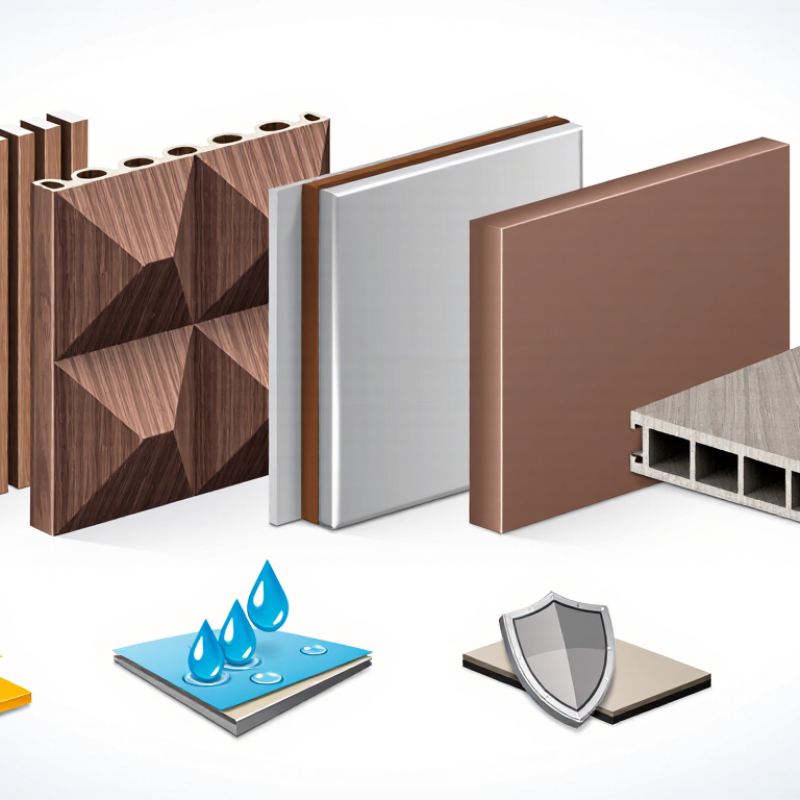
Panel construction matters. Extruded profiles can be hollow or solid, while co-extruded panels may have a protective outer layer over a composite core. That outer layer can affect cleaning and surface wear, but it does not make every panel waterproof or maintenance-free. Check the product’s installation and exposure guidance. Small details count: a cut edge can reveal the hollow cells, and poor drainage behind a panel may trap moisture. The Global Wood Plastic Composites Market report by Grand View Research estimated the overall market at USD 7.7 billion in 2023 and projected an 11.2% compound annual growth rate from 2024 to 2030. This is market-wide data, not a wall-panel forecast. That distinction matters. Without a declared formulation or test data, appearance alone cannot confirm durability.

Classifying WPC Panels by Profile, Finish, and Construction

WPC wall panels in 2026 are easiest to compare by profile, finish, and construction. Profile shapes change the room’s visual rhythm. Narrow slats add vertical lines, while wider boards create a calmer, more continuous look. Fluted faces cast fine shadows; flat profiles suit simpler interiors. Measure the wall and check the panel dimensions before choosing. A profile that looks subtle in a sample can feel busy across a full wall.

Finish affects both appearance and routine cleaning. Woodgrain textures add depth, but dust may settle in deeper grooves. Matte surfaces tend to show fewer fingerprints than glossy ones, though neither stays spotless. View samples in the room’s daylight and beside its lighting at night. Color can shift.

Construction matters too: hollow panels are generally lighter to handle, while solid designs feel denser and may need stronger fixing support. WPC can resist moisture, but that does not make every panel suitable for wet areas. Check installation requirements and allow for movement where specified.

Tips: Inspect a panel’s cut edge for consistent walls and a sound core. Compare samples at eye level, not only on a desk. Small detail, big effect.

Exploring the Leading WPC Wall Panel Types in 2026

In 2026, leading WPC wall panel types are defined by their core, profile, and surface finish.

Hollow-core panels are lightweight and easier to handle, making them suitable for interior feature walls and renovations. Their cavities can reduce rigidity, though, so proper spacing and secure fixing matter.

Solid-core panels feel denser and may offer a sturdier surface where walls receive regular contact. They also add weight, which can affect installation requirements.

Fluted and slatted panels bring depth through narrow ribs that catch side lighting. Their grooves can collect dust, a small detail worth considering before choosing them for busy rooms.

Flat panels with wood-grain or stone-inspired textures offer a quieter look. Embossed finishes can add visual texture, but printed patterns may vary in realism, so inspect a sample in the room’s actual light.

For kitchens or other humid spaces, check the product’s moisture guidance and follow installation instructions; WPC should not be treated as automatically waterproof. A useful comparison includes panel thickness, core construction, edge design, and cleaning needs—not appearance alone. One sample never tells the whole story.

Comparing Panel Types by Durability, Installation, and Maintenance

What Are the Top WPC Panel Wall Types in 2026?

Comparing Panel Types by Durability, Installation, and Maintenance

Hollow-core, solid-core, and capped WPC panels are common choices for wall projects. Hollow panels are lighter and easier to handle, but their open ends need proper sealing. Solid-core panels feel sturdier and resist dents better, though they weigh more and may take longer to install. Capped panels have a protective outer layer that can improve resistance to stains and fading. Check the product’s rated use; “WPC” alone does not guarantee outdoor performance.

Installation depends on the panel profile and wall surface. Many systems use clips or interlocking edges, so straight framing and even spacing matter. Leave the expansion gaps specified by the manufacturer, especially where temperatures change. A small alignment error can become obvious across a long wall. For upkeep, wash panels with mild soap and water, and inspect joints for trapped moisture or loosened fasteners. Avoid assuming every surface can handle abrasive cleaners.

Tips: Before buying, compare panel weight, finish, edge details, and cleaning instructions. Ask for a sample and check its texture in natural light. Keep a few spare panels for repairs; matching an aged finish later may be difficult.

Matching WPC Wall Panels to Indoor and Outdoor Applications

Indoor and outdoor WPC panels solve different problems. For living rooms, bedrooms, and sheltered offices, choose lighter, fine-textured panels or narrow fluted profiles. They add depth behind a sofa without the weight of solid timber. WPC can handle everyday humidity better than untreated wood, but it is not waterproof. Keep panels away from persistent leaks and allow airflow near damp walls.

Outdoor façades need a tougher specification. Look for UV-stabilized or capped panels, clear drainage paths, and installation details that allow thermal movement. A dark panel on a sunny west-facing wall can become hot; check the maker’s temperature and fixing guidance before installation. Grand View Research valued the global wood-plastic composites market at USD 7.49 billion in 2023 and projected 6.4% annual growth through 2030. That market-wide estimate signals demand, not proof that every wall panel suits every climate. A useful distinction, often overlooked.

Tips: Match the profile to the setting: smooth or decorative indoors, weather-rated outdoors. Check the technical sheet for UV exposure, moisture limits, expansion gaps, and fire-performance information. Take a small sample outside for a few days. Colors can surprise you.

What Are the Top WPC Panel Wall Types in 2026? — Matching WPC Wall Panels to Indoor and Outdoor Applications
WPC Panel Type Typical Construction or Profile Indoor Applications Outdoor Applications Key Selection Checks
Hollow-Core Wall Panels Panels with internal cavities that reduce material use and weight compared with solid profiles. Feature walls, living areas, bedrooms, and other dry interior spaces. Suitable only when the product is specifically rated for exterior exposure; may be used on sheltered walls or façades as directed by the manufacturer. Check the product’s moisture, UV, and temperature ratings. Follow the specified support spacing and allow for movement during installation.
Solid-Core Wall Panels Denser profiles with a mostly solid cross-section; generally heavier than hollow-core panels. Interior accent walls and areas where a more substantial panel profile is preferred. Exterior use depends on the panel formulation and stated outdoor rating; do not assume every solid WPC panel is weather-resistant. Confirm panel weight, fixing requirements, expansion gaps, and suitability for the intended environment.
Co-Extruded or Capped Panels A WPC core with a protective polymer cap or outer layer bonded to its surface. Interior walls where an easy-care surface or a particular finish is desired, provided the product is intended for indoor use. Commonly selected for exterior cladding when the manufacturer specifies UV and weather exposure suitability. Check whether the cap covers the required faces and edges, and verify the stated UV, moisture, and installation requirements.
Uncapped WPC Panels Panels without a separate protective outer cap; surface appearance and performance depend on the formulation and finish. Decorative walls in dry or appropriately ventilated interior settings. Use outdoors only if the product is expressly designed and rated for exterior conditions. Uncapped products may weather differently from capped products. Review the product’s exposure limits, maintenance guidance, and expected appearance changes before specifying it outdoors.
Fluted or Slatted Panels Linear profiles with repeated grooves, ribs, or slats; available in different core constructions and finishes. Feature walls, reception areas, and decorative interior partitions. Can be used as exterior cladding when the complete panel system is rated for outdoor use and installed with suitable backing and drainage details. Check whether the profile is a complete panel or individual slats, and confirm fixing method, ventilation, and water-management details.
Embossed or 3D-Texture Panels Panels with a textured, patterned, or wood-grain surface; may be hollow, solid, capped, or uncapped. Decorative interior walls where surface texture is part of the design. Appropriate only when the specific product is rated for exterior exposure; textured surfaces may need more attention during cleaning. Inspect a sample under the intended lighting and verify cleaning instructions and outdoor performance claims.
WPC Cladding Boards Exterior-oriented boards or profiles designed as part of a cladding assembly, often installed over a supporting structure. May be used indoors only if the product and installation method are suitable for interior applications. Exterior façades, garden walls, and other outdoor wall surfaces when the product is specified for the relevant exposure. Check local building requirements, substrate and fixing details, ventilation or drainage provisions, expansion allowances, and fire-performance documentation.

Selection note: Panel shape or surface style alone does not establish whether a product is suitable for indoor or outdoor use. Confirm the manufacturer’s technical data, installation instructions, and applicable local building requirements for the exact product and application.

S O C I A L 

  • Facebook
  • Instagram
  • Pinterest

©2022 by LaFata Cabinets. Proudly created with Wix.com

bottom of page