
top of page

Why Choose a Travel Playard for Your Baby?

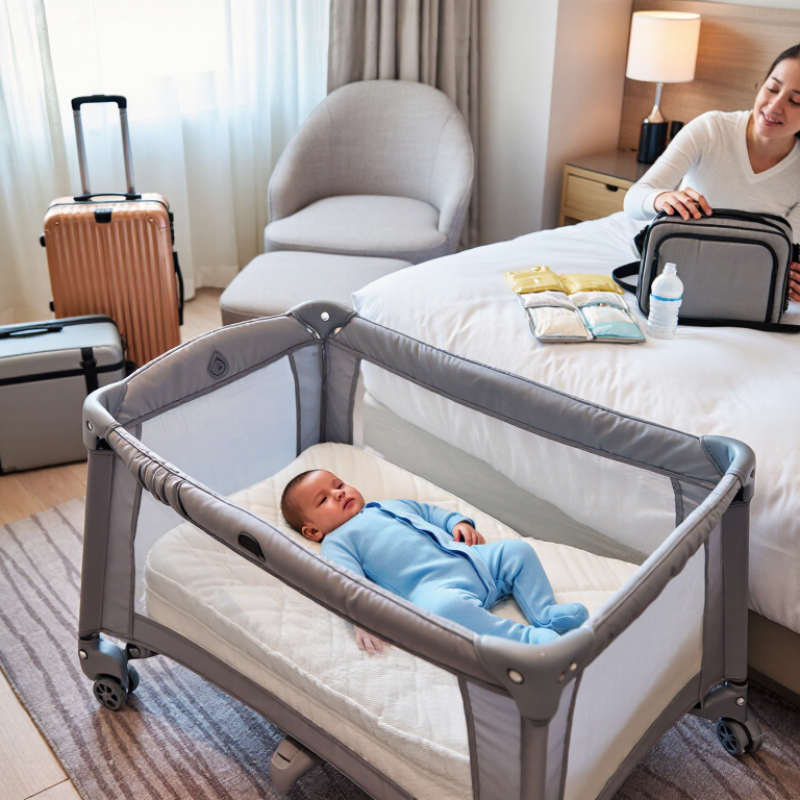
A Travel Playard can make family trips feel less like a packing puzzle. It gives your baby a familiar, contained place to rest while you unpack beside a hotel bed or visit relatives. Many models fold into a carry bag, so they fit more easily into a car trunk than a full-size crib. That convenience matters when your hands already hold a diaper bag, a bottle, and one small, determined traveler.

Baby-gear educator Jamie Grayson offers a practical reminder: “Choose the sleep space that fits your real routine, not just the prettiest product photo.” A playard may suit naps, overnight stays, or supervised play, depending on its design and the manufacturer’s instructions. Check the product’s age and weight limits, inspect the frame and fabric, and make sure the mattress fits as intended. For sleep, use only the supplied mattress and keep the space clear of pillows, loose blankets, and toys. Follow current safe-sleep guidance, too; a playard does not replace it.

Convenience has limits. Some models feel bulky on public transport, and folding one can take practice. I learned that the hard way—one stubborn latch can turn a quick setup into a small performance. Still, with a little practice at home, a Travel Playard can offer a dependable spot for your baby and a calmer rhythm for family travel.
Why Choose a Travel Playard for Your Baby?

What Is a Travel Playard?

Why Choose a Travel Playard for Your Baby?

What Is a Travel Playard?

A travel playard is a portable, enclosed space where a baby can rest or play. It usually has a folding frame, fabric sides, and a padded base. Some models fold into a carry bag, making them easier to bring to a relative’s home or set up in a hotel room. The setup can still feel awkward the first time. Practising at home helps you learn how the frame locks and folds.

Tips: Check the playard’s manual before use. Place it on a flat floor, lock every side, and keep the space clear of pillows, loose blankets, and toys during sleep. For naps or overnight sleep, use it only if the product is approved for that purpose, and follow its instructions.

For play, keep your baby within sight and remove the playard if any part looks damaged or unstable. The sides create a defined area, but they do not replace supervision. Check the base for a snug fit, and make sure your baby has room to move. A playard may save space while travelling, though it can take up more room than expected in a small guest room.

How a Travel Playard Creates a Familiar Space Away From Home

A hotel room can feel strange to a baby: different light, unfamiliar sounds, and a new place to sleep. A travel playard gives the sleep routine a recognizable anchor. Set it up in a quiet spot, use its approved fitted sheet, and repeat familiar cues, such as the same lullaby or bedtime phrase. Small details matter. Still, a familiar-looking space cannot guarantee an easy night; travel can disrupt sleep, and babies vary.

Safety matters more than recreating a nursery. The American Academy of Pediatrics’ 2022 safe-sleep recommendations call for a firm, flat, non-inclined surface and no loose bedding or soft objects. Follow the playard’s instructions, and do not add a separate mattress unless the manufacturer specifies it. The CDC reports about 3,400 sudden unexpected infant deaths in the United States each year; this figure is not specific to travel or playards, but underscores why safe sleep guidance matters. A consistent setup can offer comfort while keeping the sleep space simple. A little less familiar than home is okay.

Why Choose a Travel Playard for Your Baby?

A familiar, designated sleep space can help keep your baby’s routine consistent when you’re away from home.

Recommended sleep includes naps. A travel playard can provide a consistent place to sleep; always follow its manufacturer’s instructions and safe-sleep guidance. Source: American Academy of Sleep Medicine consensus recommendations.

Key Benefits for Babies and Caregivers

A travel playard can give a baby a familiar, contained place to rest when the family sleeps away from home. For caregivers, that means less searching for a suitable sleep spot and fewer loose household items near the baby. It can also make short breaks easier: a caregiver can prepare a bottle or unpack a bag while keeping the baby within sight. Small details matter. Check that the playard locks open, feels stable, and has no torn mesh or missing parts before each use.

A safe sleep space matters wherever the night happens. The American Academy of Pediatrics’ 2022 policy statement notes that about 3,500 sleep-related infant deaths occur annually in the United States. That figure does not mean a playard prevents these deaths. It does highlight why caregivers should follow safe-sleep guidance: place babies on their backs on a firm, flat, non-inclined surface, with no pillows, blankets, or toys. The U.S. Consumer Product Safety Commission regulates play yards under its mandatory safety standard, but caregivers should still follow the product’s instructions and check for recalls.

Convenience has limits. A travel playard may feel less cozy than a familiar crib, and a compact model may be awkward to fold at first. Practice setting it up at home, then use only the approved mattress and fitted sheet. Keep the sleep area clear, and supervise awake play. A little preparation helps.

Safety Features and Age Suitability to Consider

A travel playard can make a familiar, contained space in an unfamiliar room, but safety depends on the model and how it is set up. Read its instructions before the first trip, and check that every rail locks fully. The frame should sit on a flat floor, away from cords, heaters, and window coverings. Look for torn mesh, loose stitching, bent parts, or a mattress that shifts. Small details matter.

Age alone does not determine whether a playard still suits a child. Check the maker’s minimum age, weight limit, and any height or developmental limits. Stop using it when your child reaches a limit or can climb out, even if the product looks sturdy. Check every time. A child’s abilities can change quickly, and a playard is not a substitute for supervision.

If the playard is designed for sleep, use only the sleep setup described in its instructions. Keep the mattress firm, flat, and fitted; avoid adding pillows, blankets, positioners, or toys. On a rushed trip, a rail may seem locked when it is not, so press each one and check the base before placing your baby inside. That extra check takes a moment. It is easy to skip when tired, which is exactly why making it part of setup helps.

Why Choose a Travel Playard for Your Baby? — Safety Features and Age Suitability to Consider

Feature or Stage What to Check Why It Matters Age Suitability and Use
Stable frame and locking mechanism Check that the frame locks securely in the setup position and that all joints, rails, and supports are intact. Follow the setup instructions every time. A fully assembled, locked playard is less likely to fold or shift during use. Never use it if a part is missing, damaged, or not working correctly. Use only within the product’s stated age, weight, and developmental limits. Recheck the manual as your baby grows.
Firm, flat sleep surface For sleep, use only the mattress or pad supplied with the playard or specifically approved by its manufacturer. Keep the surface flat and unobstructed. A firm, flat sleep surface with only a fitted sheet helps create a safer sleep environment. Do not add an extra mattress, pillow, blanket, or padded liner. Follow safe-sleep guidance from birth when the product is approved for infant sleep. Stop using a sleep accessory when its instructions say to do so.
Mesh sides and ventilation Look for securely attached mesh with no tears, loose stitching, or openings. Keep the playard away from cords, blinds, and other strangulation hazards. Intact mesh allows airflow and helps keep the play space enclosed. Damaged or loose fabric can create hazards. Suitable only while the child remains within the manufacturer’s limits and cannot climb out. Supervise awake play.
Bassinet or raised insert Confirm that the accessory is designed for the specific playard, attaches as instructed, and is used only within its stated limits. A raised sleep space has different limits from the main playard. Using it after the child outgrows it can increase the risk of falls. Many raised bassinets are intended only for younger, non-mobile infants. Stop use when the manual’s weight limit is reached or when the baby begins pushing up, rolling, or otherwise exceeds the stated developmental limit—whichever comes first.
Changing station or other add-on Use only compatible accessories, secure them as directed, and never leave a baby unattended on an elevated changing surface. Add-ons are for their specific stated purpose and may have lower weight or developmental limits than the playard itself. Follow the accessory’s instructions and discontinue use as soon as its limit is reached. Do not use an add-on as a sleep surface unless it is explicitly approved for that purpose.
Climbing and mobility Watch for pulling to stand, climbing, or attempts to get over the sides. Keep toys and objects that could help a child climb out of the playard. As mobility increases, the risk of climbing out or falling changes. Age alone does not determine when a playard is no longer appropriate. Stop using the playard when the child reaches the manufacturer’s stated limit or can climb out, whichever comes first.
Portability and travel setup Practice opening and folding the playard at home. Check that it is fully locked after setup and use it on a stable, level surface. A familiar setup routine can help prevent incomplete assembly. Keep the playard away from stairs, heaters, and other hazards. Portability does not change the product’s age or developmental limits. Use the same safety checks at home and while traveling.
Product instructions and standards Read the product label and manual for assembly, cleaning, accessory compatibility, and all age, weight, and height limits. In the United States, check applicable play yard requirements, including 16 CFR Part 1221. Limits and approved uses vary by product and jurisdiction. The manual provides the specific instructions for the model. Use the manufacturer’s limits rather than a general age estimate. Check for recalls before use, especially when using a second-hand product.

Important: A playard is not a substitute for supervision. For infant sleep, place the baby on their back on a firm, flat, separate sleep surface and keep the area free of soft objects and loose bedding. Always follow the product manual and local safety guidance.

How to Choose a Travel Playard for Your Family

Why Choose a Travel Playard for Your Baby?

How to Choose a Travel Playard for Your Family

A travel playard can give your baby a familiar, contained space when visiting relatives or staying overnight. Choose one that fits your real routine: check its folded size, weight, setup steps, and whether it fits your car trunk. A spacious model may look appealing, but it can be awkward in a small guest room. I’d also check the manufacturer’s age and weight limits before buying.

For sleep, look for a product specifically designed for that purpose, with a firm, flat surface and no added pillows or soft bedding. The American Academy of Pediatrics’ 2022 safe-sleep guidance notes that room-sharing can reduce SIDS risk by up to 50%; this supports keeping an infant’s sleep space near caregivers, not a claim that any playard prevents SIDS. Read the playard’s instructions, inspect seams and locks, and make sure it opens fully on a level floor. Small details matter.

Tips: Practice folding it at home before a trip. Check that the mattress fits as intended, and avoid using extra padding. I still find folded dimensions easy to overlook, so measure your storage space before choosing.

S O C I A L 

  • Facebook
  • Instagram
  • Pinterest

©2022 by LaFata Cabinets. Proudly created with Wix.com

bottom of page