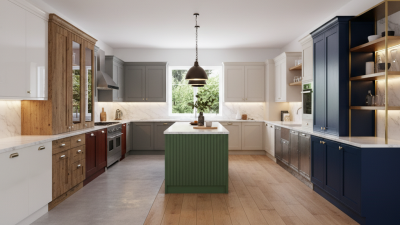
China Best Custom Cabinets Manufacturers for Global Buyers
Choosing the right China Best Custom Cabinets Manufacturers for Global Buyers requires more than comparing online prices. It demands practical knowledge, careful verification, and a clear understanding of production standards. Custom Cabinets should match the buyer’s design, space, budget, and installation requirements. A reliable manufacturer can support material selection, accurate measurements, hardware choices, packaging, and international delivery.
This guide examines manufacturers through real purchasing factors. These include factory experience, design capability, production equipment, quality control, communication, and export support. Buyers should review material samples, inspect edge finishing, and confirm cabinet dimensions before placing large orders. A kitchen showroom may look impressive, but the production details matter more. Check hinges, drawer movement, panel thickness, surface consistency, and protective packaging. Request clear quotations and written specifications.
No factory is perfect. Even experienced suppliers may face delays, color differences, or minor fitting issues. That deserves honest discussion. A sample can also look better than a large production batch if controls are weak. Therefore, global buyers should compare evidence, not promises. Factory videos help, but independent inspections provide stronger confidence. Certifications may support credibility, yet they should be verified and matched to the actual products. Payment terms, lead times, warranty procedures, and after-sales communication also deserve attention. With a structured evaluation, buyers can identify dependable Custom Cabinets partners and reduce avoidable risks. The best supplier is not always the cheapest. It is the one that communicates clearly, documents its process, and consistently delivers usable products.
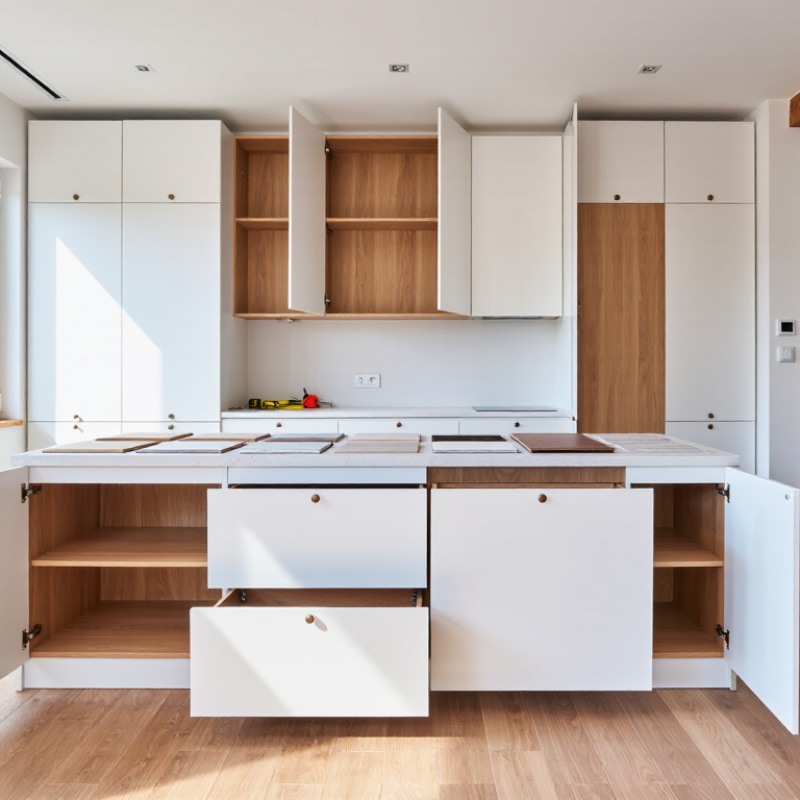
Understanding China’s Custom Cabinet Manufacturing Industry
China Best Custom Cabinets Manufacturers for Global Buyers
China’s custom cabinet industry combines large-scale production with flexible design capabilities. Many factories serve residential, hospitality, and commercial projects. Their workflows often include CNC cutting, edge banding, drilling, assembly, and surface finishing. However, machinery alone does not guarantee dependable results.
Experienced buyers should examine material specifications, moisture resistance, hardware performance, and formaldehyde testing records. Ask for production samples before approving bulk orders. A useful sample should show clean joints, consistent color, accurate drilling, and smooth drawer movement. Small details matter. A two-millimeter gap can become obvious across an entire kitchen. Factory audits also reveal storage conditions, worker skills, inspection routines, and packaging methods. Photos are helpful, but physical checks provide stronger evidence.
Clear technical communication reduces avoidable problems. Provide drawings, dimensions, door-opening directions, tolerances, and installation expectations. Confirm whether measurements use millimeters or inches. This sounds basic. It is not. Shipping protection deserves equal attention, especially for glass panels and painted doors. One common mistake is judging a supplier only by a beautiful showroom sample. A polished sample may hide weak internal materials or inconsistent mass production. Request inspection records, a detailed purchase agreement, and pre-shipment verification. Even careful planning can miss something. Reviewing the first production batch may expose a design choice that looked practical but feels awkward in daily use. Continuous feedback helps buyers build more reliable cooperation with suitable Chinese cabinet manufacturers.
China Custom Kitchen Cabinet Manufacturing: Typical Module Dimensions
Common reference dimensions used in custom kitchen cabinet planning for global projects. Measurements are shown in millimeters and represent practical industry ranges rather than any specific company standard.
Base and tall cabinet depths are commonly planned around 600 mm, while wall cabinets are typically shallower at approximately 350 mm. Toe-kick height and countertop thickness may be adjusted for local building codes, appliances, ergonomics, and buyer specifications.
How Custom Cabinets Are Designed and Produced in China
Custom cabinets made in China begin with a detailed brief, not a factory drawing. Buyers provide room dimensions, appliance positions, preferred materials, and target budgets. Designers then create CAD layouts and 3D views for checking door gaps, corner access, and storage height. A small measurement error can still cause a large installation problem.
Material selection follows the project’s climate and usage. Moisture-resistant plywood suits humid kitchens, while engineered panels support stable dimensions and cost control. Adhesive, edging, hinges, and coating samples are tested before mass production. According to Grand View Research, the global kitchen cabinets market was valued at more than 90 billion dollars in 2023. This scale increases demand for repeatable quality and documented production.
Factories usually confirm a pre-production sample before cutting full panels. CNC machines improve drilling accuracy, but skilled workers still inspect grain direction, surface color, and edge bonding. ISO 9001-based quality systems commonly guide inspection records, although certification alone cannot guarantee perfect workmanship. The Freedonia Group identifies remodeling and replacement demand as major cabinet-market drivers. That matters for global buyers, because custom orders often combine unusual sizes with strict delivery schedules. I have found that clear approval drawings prevent more problems than attractive renderings. Mistakes happen. Honest communication makes them manageable.
| Design or Production Stage | Typical Work and Methods | Key Data or Checkpoint | Useful Buyer Deliverable |
|---|---|---|---|
| Project brief and site information | Cabinet requirements are collected, including room use, layout, preferred finishes, appliances, plumbing, electrical points, and installation conditions. | Confirm measurement units, wall and floor conditions, ceiling height, service locations, and appliance specifications before finalizing the layout. | Written project brief, site measurements, appliance schedule, and reference images. |
| Layout and design development | Designers prepare cabinet layouts and may use CAD or 3D visualization to coordinate storage, doors, drawers, fillers, and clearances. | Review cabinet positions, opening direction, access to appliances, corner solutions, and any site-specific gaps or fillers. | Dimensioned plans, elevations, 3D views where requested, and a revision record. |
| Technical drawings and approval | Approved designs are translated into production drawings and component specifications before manufacturing begins. | Check overall dimensions, panel thicknesses, door and drawer sizes, edge details, finish references, and hardware locations. | Signed-off shop drawings and a written specification schedule. |
| Material and finish selection | Cabinet components may use plywood, particleboard, MDF, solid wood, or combinations of materials. Surface options can include laminate, veneer, paint, or other specified finishes. | Specify the material for each component, surface finish, edge treatment, and any required emissions or performance documentation. Properties vary by product and grade. | Material schedule, finish samples or codes, and applicable product documentation. |
| Panel cutting and machining | Panels are cut to the approved component sizes using industrial panel saws or CNC equipment. Drilling and routing may also be completed by CNC machinery. | Compare cut parts and machining details with the approved drawings; confirm that openings and holes are in the intended positions. | Component list and production drawings linked to the approved design revision. |
| Edge treatment and finishing | Exposed panel edges may be finished with edge banding. Painted, stained, veneered, or other specified surfaces are prepared and finished according to the selected system. | Check visible edges, corners, color consistency, surface appearance, and finish requirements against the approved sample. | Approved finish sample and documented criteria for appearance and edge quality. |
| Hardware fitting and assembly | Cabinet parts are assembled and specified hinges, drawer runners, handles, or other fittings are installed or prepared for installation. | Verify hardware type and location, door and drawer alignment, smooth movement, and compatibility with the design. | Hardware schedule and assembly or installation instructions. |
| Quality inspection | Finished units or components are checked before packing. Inspection commonly covers dimensions, visible surfaces, edge treatment, assembly, and hardware operation. | Use the approved drawings and finish references as inspection criteria; record any defects and corrective actions. | Inspection checklist, photographs, and a record of approved corrections where applicable. |
| Export packing and shipment preparation | Cabinet parts are packed for transport using suitable protective materials and packaging selected for the shipment and handling route. | Confirm package labels, part identification, packing list, protection against movement and surface damage, and required shipping documents. | Packing list, package or pallet labels, and shipment documentation agreed for the destination. |
| Installation coordination | Installation planning accounts for site readiness, delivery sequence, assembly requirements, and any local installer or contractor responsibilities. | Confirm who handles unloading, installation, adjustments, and site preparation before dispatch. | Installation guide, final cabinet schedule, and a clear allocation of responsibilities. |
Types of Chinese Cabinet Manufacturers and Their Capabilities
Chinese cabinet manufacturers generally fall into four groups: mass-production factories, project-based manufacturers, design-led workshops, and integrated export suppliers. Each serves a different buyer.
Mass-production factories use automated panel saws, edge banders, and drilling lines. They suit repeated layouts and price-sensitive housing projects.
Project-based manufacturers handle hotels, apartments, and commercial interiors. Their strength is batch coordination.
Design-led workshops offer more flexible finishes, unusual dimensions, and detailed joinery. However, capacity may fluctuate during peak seasons. Integrated export suppliers often combine design, manufacturing, packaging, and installation support. They can reduce communication gaps, but buyers should verify which processes are actually performed in-house.
The 2024 CSIL China Furniture Outlook identifies China as one of the world’s largest furniture production bases, with annual furniture exports exceeding 70 billion US dollars in recent years. This scale supports competitive sourcing, yet it does not guarantee cabinet quality. The China National Accreditation Service reports that quality systems require documented control, testing, and traceability. Ask for these records.
A practical audit should inspect edge sealing, hinge alignment, moisture resistance, and carton protection. Check one cabinet door repeatedly. Weak hinges often reveal themselves there.
Request a pilot order before approving full production. This step feels slow, but it exposes color variation, drilling errors, and packaging damage.
I have found that factory size can mislead buyers. A smaller specialist may deliver cleaner custom work, while a larger plant may control costs better.
The difficult part is matching capability with the project, not simply choosing the lowest quotation.
How Global Buyers Evaluate and Select a Cabinet Manufacturer
Global buyers evaluate cabinet manufacturers through evidence, not attractive catalogs. A serious supplier should provide factory photos, production capacity, material specifications, and recent project references. Buyers often request a sample door, drawer box, hinge, and finish panel before discussing large orders. Small details matter. Check edge alignment, surface consistency, drilling accuracy, and packaging strength.
Technical knowledge helps reveal hidden risks. Ask how the manufacturer controls moisture content in wood-based panels. Confirm formaldehyde testing, hardware load capacity, and tolerance standards. Review shop drawings carefully, especially around appliances, plumbing, and uneven walls. A clear quotation should list materials, finishes, accessories, tooling costs, lead time, and replacement terms. Vague pricing creates problems later.
Reliability appears during difficult conversations. Does the manufacturer explain production limits honestly? Can the quality team send inspection records with dated photographs? During one sample review, an attractive edge band lifted after humidity exposure. The problem was minor, but it exposed weak testing. That experience changed the evaluation process. Buyers should test finishes under realistic conditions, not only under showroom lighting. Factory audits, independent inspections, secure payment terms, and written approvals provide stronger protection. Communication speed also matters, although fast replies do not always mean dependable production. A manufacturer may be technically capable yet unsuitable if it avoids responsibility when specifications change.
Key Factors in Sourcing Custom Cabinets from China
Sourcing custom cabinets from China begins with a clear specification, not a low quote. Share dimensioned drawings, finish samples, hardware requirements, and room conditions. A cabinet intended for a humid kitchen needs different material choices from one designed for a dry office. Ask suppliers to state board thickness, edge-banding method, finish system, and allowable size tolerances. Vague specifications invite mismatched expectations.
Inspect production capability before committing to volume. Request a sample or pre-production unit and check door alignment, drawer movement, surface consistency, and color under natural light. Small details matter. Confirm how the factory handles revisions, quality checks, and replacement parts. A polished sample alone does not prove that every production unit will match it. Ask how inspection results are recorded and shared.
Plan logistics alongside product design. Confirm carton dimensions, protective corner packing, labeling, and the shipping schedule before approving the order. Moisture protection can matter during long transport, especially for wood-based panels. Agree on milestones for drawings, sample approval, production, and final inspection in writing. Communication gaps are easy to underestimate; time-zone delays and unclear technical terms can slow decisions. Even a careful process can miss something, so keep a practical buffer for adjustments.
Related Posts
-
Top 10 Local Kitchen Cabinets Styles You Should Consider?
-
Navigating Tariff Challenges How Best Custom Cabinets from China Thrive in Global Markets
-
Innovative Design Trends for Best Custom Kitchen Cabinets in 2025 with Alternative Solutions
-
What Makes New Cabinets a Game Changer in Global Supply Standards
-

2026 Top Kitchen Cabinets Trends for Global Buyers?
-
Best Custom Kitchen Cabinets Trends for 2026 Global Buyers?


Fall into Function: How LaFata Cabinets Prepares Your Kitchen for the Cozy Season


Back-to-School Kitchen Refresh: How LaFata Cabinets Can Help You Stay Organized This Fall