What Is the Best Type of Custom Kitchen Cabinets?
The best type of Custom Kitchen Cabinets depends on how you cook, what you store, and how much maintenance you can manage. There is no single construction style that suits every home. Framed cabinets have a face frame across the front, while frameless cabinets offer wider, unobstructed access. Both can work well; the right choice depends on the room and your priorities.
Materials matter, too. Plywood cabinet boxes are often chosen for their strength and resistance to everyday wear. Solid wood can bring warmth and distinctive grain, though it may expand or contract as humidity changes. Medium-density fiberboard can provide a smooth surface for painted doors, but moisture protection and careful installation remain important. A maple door beside a well-finished plywood box may be a more practical choice than an all-wood cabinet in some kitchens. Details matter.
A useful comparison starts with daily routines. Do you need deep drawers for pots, pull-out shelves for pantry items, or a clear path around an island? Check door and drawer hardware, interior finishes, joinery, and the quality of installation—not just the sample door in a showroom. In a busy kitchen, a beautiful finish that shows fingerprints easily may become frustrating. Budget also shapes the answer: custom sizing and thoughtful storage can solve awkward corners, but added features increase cost. The best plan may still involve trade-offs. This guide compares cabinet styles, materials, and practical features so you can weigh appearance against durability, storage, and upkeep. It depends. And sometimes, the less obvious choice works better.
How Custom Kitchen Cabinets Are Classified
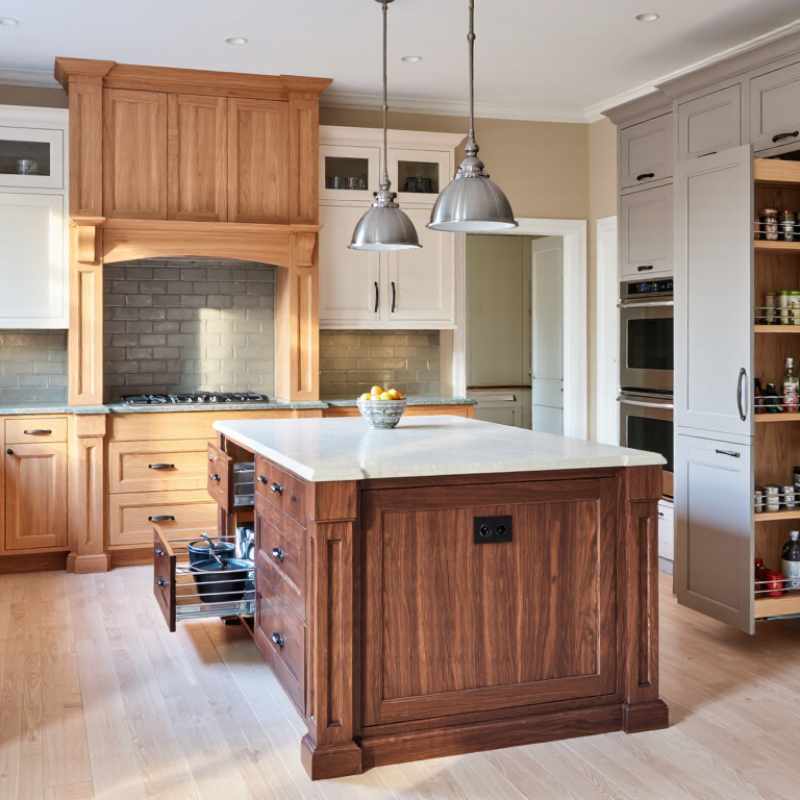
Custom kitchen cabinets are best understood through three classifications: customization level, cabinet construction, and finish.
Stock units come in fixed sizes and limited configurations. Semi-custom cabinets allow selected changes, such as wider drawers or adjusted depths. Fully custom cabinets are built to specified dimensions, useful for sloped ceilings, narrow alcoves, or appliances that need precise clearance.
Construction creates another distinction. Framed cabinets have a face frame across the front; frameless cabinets offer a more open cabinet opening. Neither is automatically stronger. Door alignment, joinery, hardware, and installation quality matter too.
A useful detail to check is the drawer box: inspect its joints and slide action, not just the showroom finish. Small things matter.
Finish and material are separate categories. Painted wood, stained wood, and wood-look surfaces each show wear differently, especially near sinks and cooktops.
Houzz’s 2024 U.S. Kitchen Trends Study reported white as the leading cabinet color at 41%, with wood tones at 24%. That indicates demand, not durability.
A pale finish can brighten a dim kitchen, but fingerprints may show. The classification labels help compare options, though “custom” alone says little about craftsmanship or long-term performance. Ask for material specifications, finish samples, and a written list of included modifications. I’d also check a sample under the kitchen’s actual lighting; showroom lights can be flattering.
How Cabinet Construction Affects Durability and Cost
What Is the Best Type of Custom Kitchen Cabinets?
How Cabinet Construction Affects Durability and Cost
Cabinet construction shapes how a kitchen feels after years of daily use. Framed cabinets have a face frame across the front, which can add rigidity and suit traditional designs. Frameless cabinets offer wider openings, but their box construction and hardware must be carefully specified. Plywood cabinet boxes often cost more than particleboard options and can be a practical choice near sinks, where leaks may occur. Still, no material is waterproof. A sound finish and prompt repairs matter.
Cost deserves a wider view. Remodeling magazine’s 2024 Cost vs. Value report put a midrange minor kitchen remodel at $27,492 nationally, with an estimated $26,406 in resale value. That project includes more than cabinets, so the figures are not a cabinet price guide. They do show why durable construction should be weighed against the full renovation budget. Solid-wood doors, sturdy drawer joints, and quality hinges can raise upfront costs. But weak boxes or misaligned doors may mean earlier repairs. I would not treat plywood as magic; workmanship and moisture control still matter.
Tips: Ask for the box material, door construction, drawer-joint details, and hardware rating in writing. Check a sample corner and open each drawer. Small details count. Compare warranties, but read their exclusions carefully. A cabinet can look solid in a showroom and still disappoint at home.
How Materials and Finishes Shape Cabinet Performance
Custom kitchen cabinets are only as dependable as their materials and construction. Plywood boxes generally hold screws well and tolerate everyday humidity better than many particleboard options. That does not make every plywood cabinet moisture-proof. Leaks still need prompt attention. Solid wood doors can be repaired and refinished, but they may shift slightly as humidity changes. In a busy kitchen, that movement can show as small gaps or tight corners. Medium-density fiberboard offers a smooth, stable surface for painted doors, though damaged edges need careful protection from water.
Finishes shape how cabinets look after years of opening, wiping, and cooking. A durable clear coat helps resist stains and mild abrasion on wood, while a quality painted finish makes color consistent across doors. Matte surfaces can soften glare, but they may show greasy fingerprints more clearly than expected. Small details matter. Check whether the finish wraps around door edges and whether exposed cabinet sides match the fronts; these areas often take knocks from bags, stools, and cleaning tools. Ask how the surface should be cleaned before choosing it. Even a strong finish can dull when scrubbed with abrasive pads, and the easiest finish to maintain is not always the one that looks best in a sample.
How Storage Features and Styles Fit Different Kitchens
The best custom kitchen cabinets are the ones that suit how the room is used, not just how it looks. In a narrow kitchen, shallow drawers and pull-out shelves can make everyday items easier to reach. Deep drawers often hold pots more neatly than low cupboards. A corner unit may help, but only if its contents stay accessible. Small kitchens need restraint.
Tips: Measure the appliances, doors, and walking paths before choosing cabinet depth. Store plates near the dishwasher and cooking tools beside the stove. Leave clear counter space where you prep food.
Cabinet style should also fit the room’s light and layout. Flat-front doors can keep a compact kitchen feeling calm, while framed doors add detail to a larger, traditional space. Open shelving looks airy, but it collects dust and needs regular tidying. It is easy to underestimate that upkeep. Consider durable finishes where hands touch often, such as drawer pulls and cabinet edges. A beautiful plan can still feel awkward if drawers collide or frequently used items sit overhead. Review the layout with actual cookware and routines in mind; small adjustments on paper can prevent daily annoyances.
How to Choose Custom Cabinets for Your Needs
Choosing custom kitchen cabinets starts with how you use the room, not with door styles. 76% of renovating homeowners upgraded their cabinets, according to Houzz’s 2024 U.S. Kitchen Trends Study. That demand makes sense: tailored widths can use awkward corners and fit appliances neatly. Still, custom does not automatically mean better. A carefully planned standard cabinet may serve a simple layout just as well.
Map your daily routine before choosing features. Note where groceries land, which drawers hold pans, and whether two people cook together. The National Kitchen & Bath Association recommends 42-inch work aisles for one cook and 48 inches for multiple cooks. Measure twice. Then ask a cabinet professional to confirm clearances, appliance openings, and storage access. Choose materials for your real conditions: a busy household may value durable finishes more than delicate detailing. Solid wood, plywood, and engineered panels each behave differently with moisture and temperature, so ask how the cabinet boxes and edges are constructed.
Related Posts
-
2026 Top Kitchen Cabinets Trends for Global Buyers?
-
Best Custom Kitchen Cabinets Trends for 2026 Global Buyers?
-
Top 10 Types of Home Kitchen Cabinets for Global Buyers
-
China Top Kitchen Cabinet Styles for Global Buyers
-
Innovative Ideas for Maximizing Space with Unique Bathroom Storage Solutions
-

How to Source Kitchen Cabinets from Global Suppliers


Fall into Function: How LaFata Cabinets Prepares Your Kitchen for the Cozy Season


Back-to-School Kitchen Refresh: How LaFata Cabinets Can Help You Stay Organized This Fall