
China Top 10 Cherry Kitchen Cabinet Manufacturers
China’s kitchen cabinet industry combines large-scale manufacturing with increasingly refined design and finishing capabilities. Cherry Kitchen Cabinets remain popular for their warm reddish-brown tones, visible grain, and traditional appeal. Their appearance can change noticeably under daylight, artificial lighting, and different clear finishes.
Market evidence supports continued attention to this category. Grand View Research has reported steady growth in the global kitchen cabinets market, supported by housing renovation, replacement demand, and greater interest in customized storage. CSIL research also identifies China as a major furniture manufacturing and export base. These findings do not prove that every supplier offers equal quality. They provide useful industry context.
This guide examines China’s top 10 cherry kitchen cabinet manufacturers through practical purchasing criteria. These include panel construction, moisture resistance, finishing consistency, hardware options, production capacity, certification, export experience, and after-sales support. Factory audits, sample comparisons, and specification checks remain essential.
A polished showroom can hide weak details.
Look closely at drawer alignment, edge sealing, hinge performance, and color matching across doors. Also, “cherry” may describe a finish rather than solid cherry wood. Buyers should confirm the core material, veneer structure, formaldehyde testing, and applicable market standards before ordering.
The ranking is not perfectly objective. Manufacturer data can change, and public information is sometimes incomplete. Therefore, this overview should support supplier evaluation, not replace independent verification. It aims to connect reported market trends with the small details that determine whether a cabinet performs well in a real kitchen.
Definition and Characteristics of Cherry Kitchen Cabinets
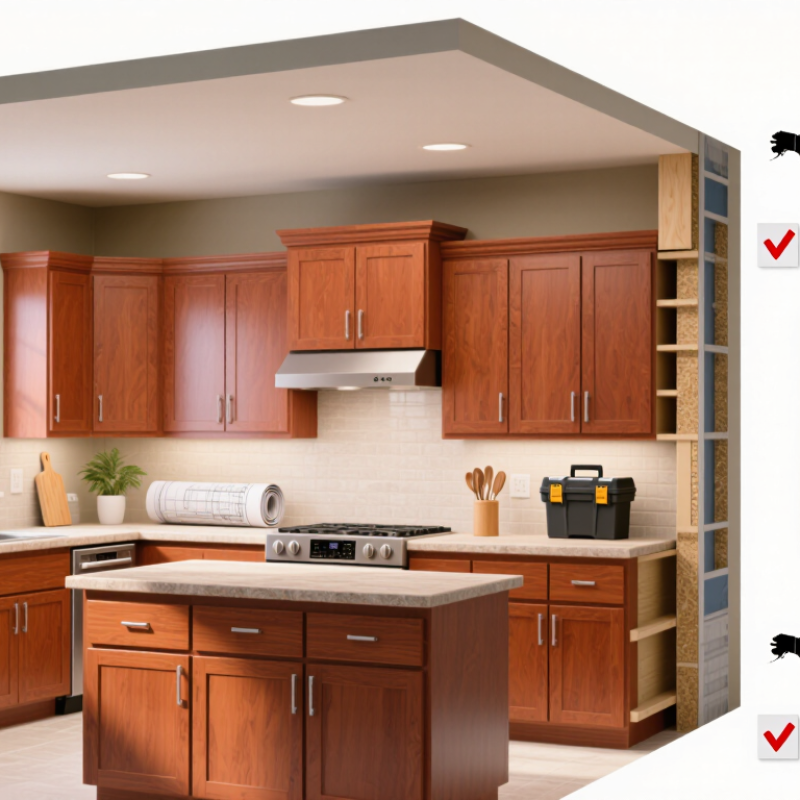
Cherry kitchen cabinets are made from cherry hardwood, valued for their warm color and refined grain. Freshly installed doors often show pale pink or honey tones. Over time, sunlight deepens the wood into richer red-brown shades. This natural aging is one of cherry’s defining characteristics.
The grain is usually fine, smooth, and gently flowing rather than heavily patterned. That surface suits raised-panel doors, flat panels, and simple modern frames. Cherry is strong enough for daily kitchen use, yet it is softer than maple or some oak varieties. Small dents can appear near drawer pulls and busy work areas. That is not always a manufacturing defect.
Color variation matters. Sapwood may look lighter, while heartwood appears darker and warmer. Samples can also differ from full cabinet doors. I have found that showroom lighting often makes cherry look more uniform than it really is. Ask manufacturers for larger samples and inspect the finish under natural daylight.
A dependable cherry cabinet should have stable joinery, even finishing, and properly sealed exposed edges. Moisture deserves attention, especially beneath the sink and beside dishwashers. Wipe spills promptly. Use a soft cloth instead of abrasive cleaners, which can dull the protective coating. Choosing cherry means accepting gradual change, visible character, and occasional imperfections rather than expecting a perfectly consistent color.
| No. | Manufacturer Capability Profile | Typical Cherry Cabinet Construction | Core Material and Joinery | Common Finish Options | Key Characteristics | Typical Customization | Best Application |
|---|---|---|---|---|---|---|---|
| 1 | Solid-Cherry Custom Cabinet Specialist | Cherry face frames, doors, drawer fronts, and selected solid-wood components | Hardwood frames with plywood or solid-wood cabinet boxes; mortise-and-tenon or dowel joinery | Clear protective coat, natural stain, medium brown, or reddish-brown stain | Highlights the natural grain, warm color, and gradual color deepening associated with cherry wood | Highly flexible sizing, door profiles, interior fittings, and decorative details | High-end residential kitchens and traditional interior designs |
| 2 | Semi-Custom Cherry Cabinet Manufacturer | Cherry veneer or solid cherry doors combined with engineered cabinet panels | Plywood or furniture-grade composite boxes with reinforced hardwood fronts | Natural, honey, cognac, espresso, or light distressed finishes | Balances authentic cherry appearance with controlled cost and repeatable production | Multiple widths, heights, storage accessories, and door styles from a defined range | Whole-kitchen remodeling projects requiring moderate personalization |
| 3 | Veneer-Focused Cabinet Producer | Cherry veneer applied to stable plywood or medium-density fiberboard panels | Engineered panels reduce movement; concealed hinges and cam or dowel assembly are common | Uniform clear coat, satin stain, or factory-applied conversion varnish | Consistent grain matching, reduced wood movement, and efficient use of cherry timber | Standard cabinet modules with selected finish and hardware choices | Contemporary kitchens and projects with a controlled material budget |
| 4 | Frameless European-Style Manufacturer | Cherry veneer or cherry-look fronts on full-access, frameless cabinet boxes | Melamine, plywood, or engineered panels with adjustable concealed hinges | Flat natural stain, matte clear coat, or mixed wood-and-painted finishes | Maximizes usable interior space and suits clean, minimal cabinet layouts | Wide selection of drawer systems, pull-outs, lift-up doors, and integrated organizers | Modern kitchens, apartments, and compact spaces requiring efficient storage |
| 5 | Face-Frame Traditional Cabinet Manufacturer | Cherry face frames with raised-panel, recessed-panel, or shaker-style doors | Hardwood front frames, plywood sides, and reinforced drawer openings | Medium cherry stain, glaze, hand-rubbed finish, or subtle distressing | Creates a classic furniture-like appearance with strong visual framing | Flexible molding, valance, corbel, leg, and trim selections | Traditional, transitional, farmhouse, and heritage-style kitchens |
| 6 | Moisture-Controlled Cabinet Manufacturer | Cherry components manufactured and finished under controlled humidity conditions | Stable plywood boxes, sealed exposed edges, and mechanically secured hardwood parts | Multi-coat clear finish or catalyzed protective coating on all accessible surfaces | Designed to limit seasonal movement, joint opening, and finish stress | Regional material specifications, ventilation details, and climate-adapted construction | Humid regions, coastal homes, and kitchens exposed to frequent temperature changes |
| 7 | High-Production Modular Manufacturer | Factory-standardized cherry veneer doors and modular cabinet carcasses | Engineered wood boxes, confirmat screws, dowels, and reinforced hanging rails | Factory-applied natural, medium, or dark cherry-toned finishes | Offers predictable dimensions, repeatable quality, and faster project coordination | Limited modifications, standard cabinet sizes, and preselected accessories | Large developments, rental properties, and time-sensitive renovations |
| 8 | Export-Oriented Custom Manufacturer | Cherry veneer, solid cherry frames, or mixed-material construction based on project specifications | Plywood or engineered boxes with export-grade packaging and hardware compatibility | Water-based, solvent-based, UV-cured, or conversion-varnish finishes depending on specification | Adapts dimensions, hardware standards, packaging, and documentation for overseas projects | High flexibility in drawings, container planning, finishes, and installation requirements | International residential, hospitality, and property-development projects |
| 9 | Sustainable-Material Cabinet Manufacturer | Certified or traceable cherry veneer and solid-wood accents used selectively | Low-emission plywood or fiberboard, water-based adhesives, and durable mechanical fittings | Low-VOC waterborne clear coats, natural oil finishes, or low-emission stains | Emphasizes material traceability, reduced emissions, and efficient wood utilization | Environmental documentation, recycled-content options, and finish selection | Green-building projects and environmentally conscious residential interiors |
| 10 | Replacement-Parts and Renovation Specialist | Cherry replacement doors, drawer fronts, panels, and matching cabinet accessories | Existing cabinet boxes retained where structurally sound; new cherry components made to measure | Color-matched stain, clear coat, touch-up finish, or partial-refacing system | Updates kitchen appearance without requiring complete cabinet replacement | Custom measurements, replacement profiles, filler panels, and trim matching | Budget-conscious renovations, partial remodels, and historic-home upgrades |
Related Posts
-
Innovative Approaches for Sourcing Custom Kitchen Cabinets
-
Understanding the 2025 Technology Trends for the Best Custom Kitchen Cabinets You Should Know
-
Innovative Design Trends for Best Custom Kitchen Cabinets in 2025 with Alternative Solutions
-
What Are the Key Features of High-Quality Home Kitchen Cabinets?
-

Exploring Custom Kitchen Cabinets Trends at the 138th Canton Fair in 2025: Key Industry Insights
-
Transform Your Cooking Space: Innovative Home Kitchen Cabinets for Modern Living


